Lead Free Kids
As the Visual Designer for the CDC’s #LeadFreeKids campaign, I crafted this piece to translate a highly technical concern—lead leaching from brass faucets—into a relatable human story. My approach was to center the design on authenticity and accessibility. Using a real photo of a weathered outdoor faucet, I grounded the communication in a familiar household image. To reinforce relatability, I layered in a direct parent quote framed as a genuine concern, shifting the tone from informational to conversational. My role extended beyond design to storytelling: I identified that framing the message as a personal question would make the audience more likely to pause, reflect, and engage. Visually, I balanced campaign authority with emotional resonance by using high-contrast brand colors, clean typography, and a clear hashtag anchor. The result is a social asset that doesn’t just inform—it prompts dialogue, resonates across diverse households, and drives awareness of environmental safety practices.
- Client: CDC Communications
- Role: Visual Design, Layout, Illustration, Typography
- Tools: Adobe Photoshop, Illustrator
- Deliverable: Social Media graphic
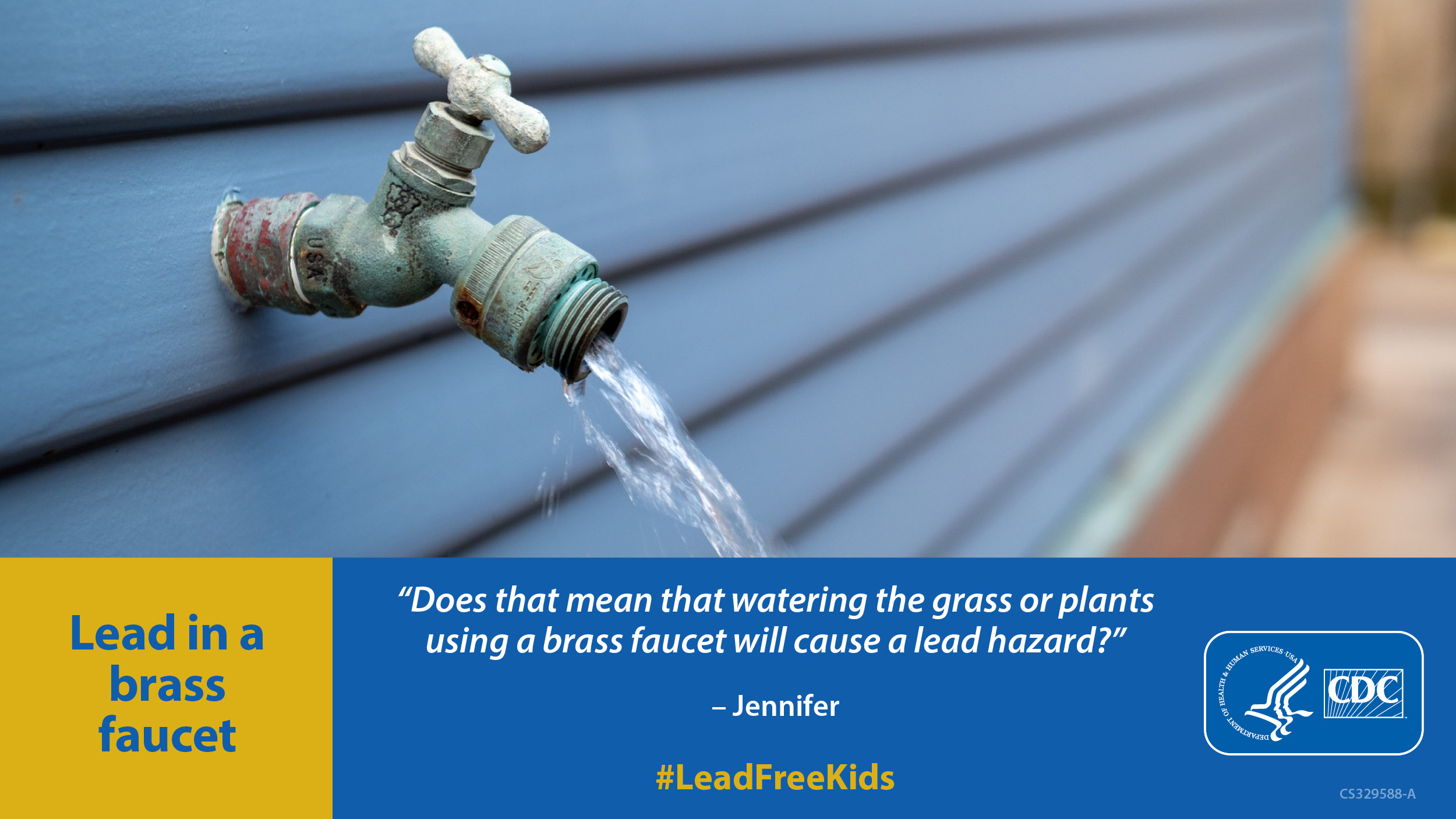
This piece was designed for parents, caregivers, and homeowners concerned about environmental safety. The goal was to simplify a technical issue—lead exposure from brass faucets—into a relatable question framed through a real parent’s voice, making the communication more personal and less clinical.
The design leverages authenticity: a real photograph of an old outdoor faucet, paired with a conversational quote. The use of bold yellow and deep blue provides high contrast and accessibility, while also aligning with CDC’s branding. The hashtag #LeadFreeKids functions as both a campaign anchor and a social-sharing tool.
The left vertical bar introduces the topic (“Lead in a brass faucet”) in large, accessible type. The central panel integrates the photo with the quote overlay, ensuring balance between emotional resonance and practical information. The CDC mark provides authority and trust.
This design transforms a technical hazard into an approachable, shareable message that resonates with everyday concerns. It reduces fear by grounding the issue in a personal question while directing attention toward safe practices.