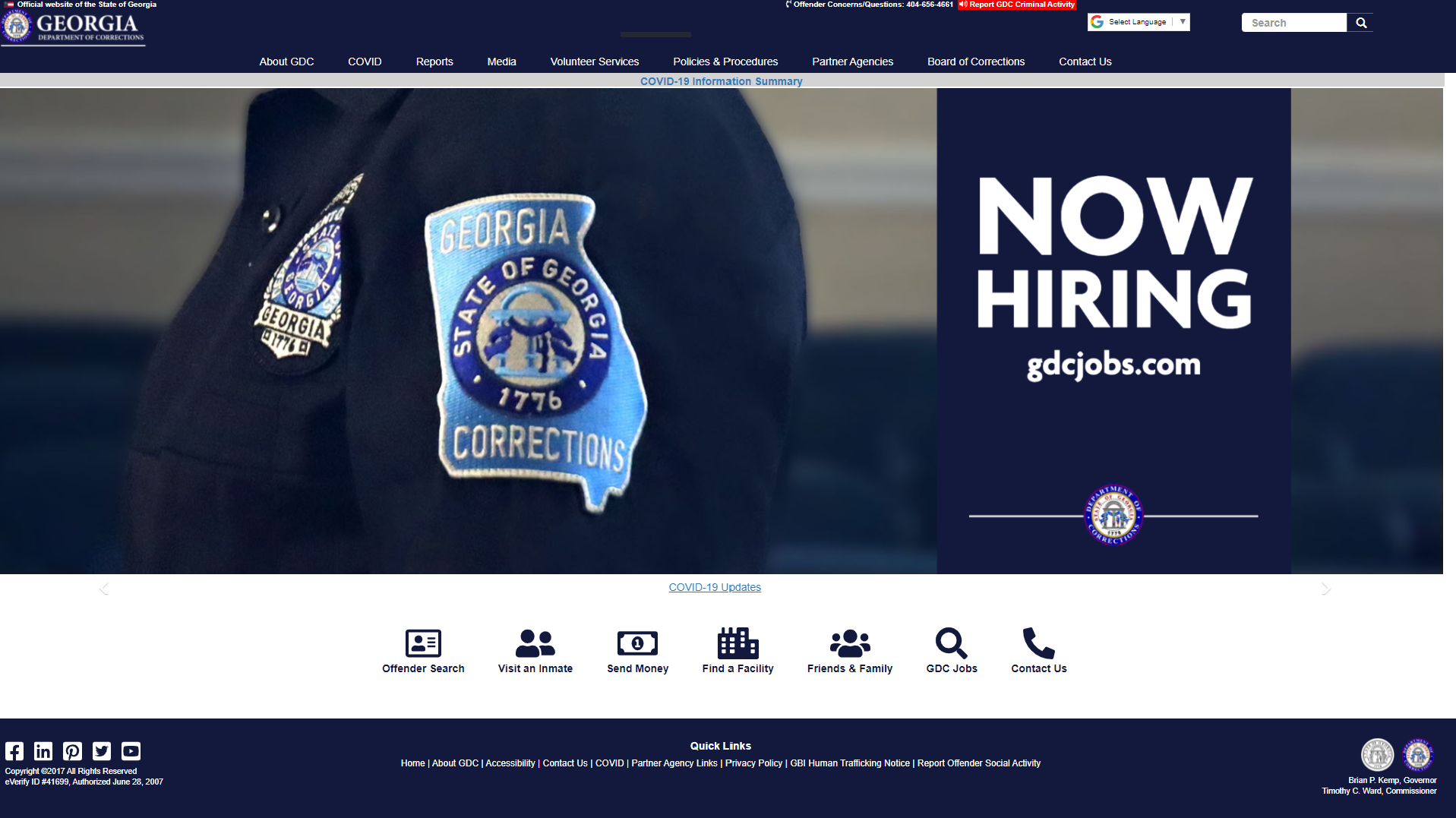
GDC website screenshot

Georgia Department of Corrections

Empowering 5,000+ officers with a fully accessible, unified training and incident-reporting portal.

View Live Site

My Role

  • Lead Designer
  • UI/UX Designer
  • Front‑End Developer
  • Project Manager
  • Product Designer

Challenge

Revamp and consolidate the Department’s sprawling intranet—migrating dozens of disconnected training modules, policy documents, and incident-reporting tools into a single, fully Section 508-compliant SharePoint portal—so that 5,000+ staff can find critical procedures in under two clicks and file reports in under one minute during high-pressure situations.

Key Metrics

  • 508 Compliance: 100%
  • Incident-report submission time ↓60%
  • Training-module completion rate ↑80%
  • Document-lookup time ↓60%
  • Staff satisfaction (post-launch survey) ↑18%

Responsibilities & Resolutions

As the lead Designer and Developer on a multidisciplinary team, I was responsible for the full redesign and redevelopment of the Georgia Department of Corrections (GDC) website. The goal was to modernize the digital experience, improve usability, increase public engagement, and ensure compliance with state and federal web standards.

The legacy site—built on Drupal 7—was outdated, non-compliant, and difficult to navigate. I led the effort to migrate the platform to Drupal 8, designing and developing a scalable, accessible, and search-optimized site that aligned with the department’s mission and operational needs.

Key Reponsibilities:

  • Content Strategy & Architecture: Collaborated with agency stakeholders to gather content, audit the existing site, and map out a new information architecture based on real user behavior and analytics from the previous platform.
  • UX/UI Design: Created wireframes, mockups, and interactive prototypes for usability testing, focusing on simplifying navigation and improving user flow through a one-to-two-click access model.
  • Development & Migration: Designed and coded responsive, 508-compliant page templates in Drupal 8, ensuring mobile optimization, cross-browser compatibility, and fast load times.
  • Analytics-Driven Decisions: Utilized Google Analytics and heat mapping tools to identify top-performing content, frequently visited pages, and common user paths—informing layout priorities and navigation hierarchy.
  • Stakeholder Engagement: Maintained consistent communication with internal teams and department leadership to gather feedback, report progress, and align design solutions with user needs and policy requirements.

Primary Issues Addressed:

  • Lack of SEO optimization and metadata structure.
  • Inaccessible and non-compliant UI (Section 508/ADA).
  • Fragmented navigation and deep content buried in the site.
  • Outdated visual design and inconsistent branding.
  • No structured method for showcasing service-based or informational content.

Solutions Implemented:

  • Introduced SEO best practices including semantic markup, structured metadata, and keyword strategy.
  • Redesigned and developed a simplified, ADA-compliant menu and navigation system.
  • Improved content hierarchy and page layouts for better readability and engagement.
  • Designed a modern visual identity for the web platform aligned with state branding standards.
  • Enhanced user flow and information findability across all user groups.

The project resulted in a dramatically improved online presence for the Georgia Department of Corrections, delivering a clean, accessible, and functional website that supports both public information needs and internal efficiency.

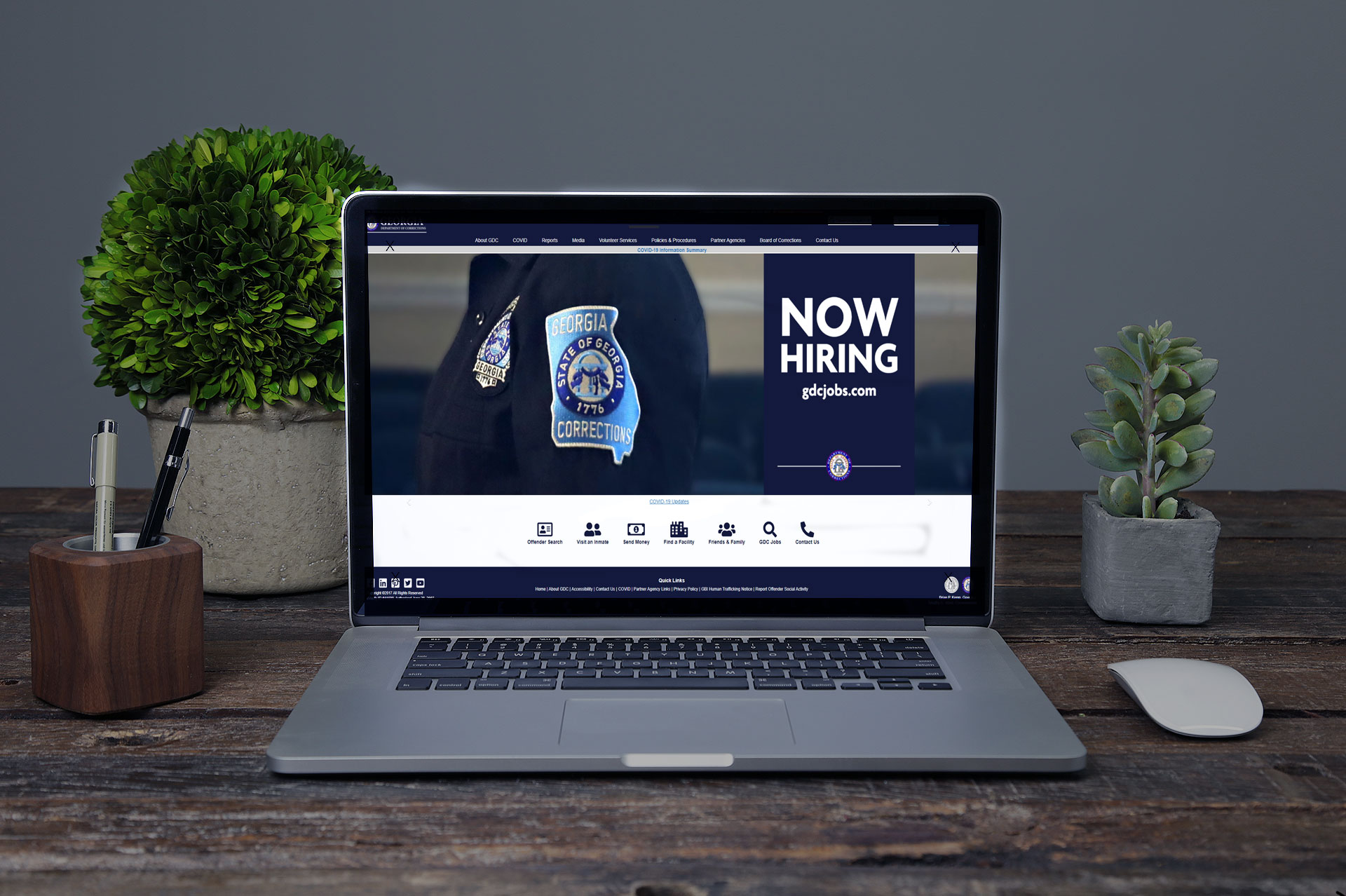
Image of GDC website on a laptop mockup
Brand workshop & wireframe sketches
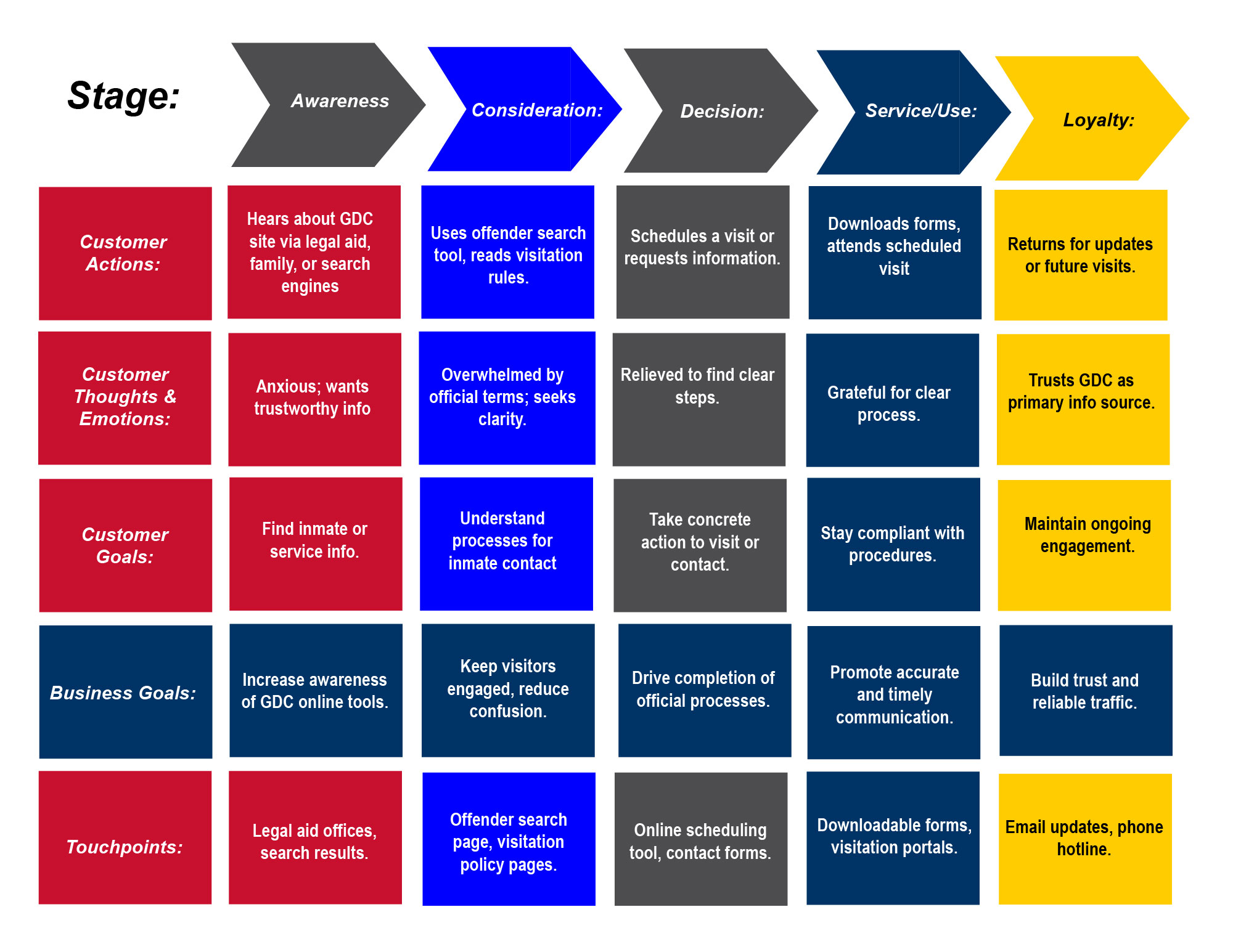
GDC Journey Map
GDC Journey Map

Research, Planning & Design

The initial phase of the Georgia Department of Corrections website redesign was focused on thorough research, strategic planning, and UX-focused design exploration. This foundational stage was critical in ensuring that all stakeholder requirements were met while laying the groundwork for an accessible, scalable, and search-optimized digital platform.

As the primary point of contact for design and development, I maintained consistent communication with internal teams and executive leadership through structured weekly meetings. These collaborative sessions allowed us to align on business goals, define technical constraints, and prioritize user-centric outcomes for the redesign.

Key Contributions & Contributions:
  • Stakeholder Alignment: Facilitated weekly planning meetings to identify core issues with the legacy Drupal 7 platform and establish a roadmap for the Drupal 8 migration.
  • SEO & Content Strategy: Conducted in-depth SEO audits and keyword research to improve search engine rankings and strengthen content discoverability across the site.
  • UX Research: Analyzed user interaction data and heatmaps to understand behavior patterns, friction points, and high-traffic pages—informing layout decisions and content prioritization.
  • Product Presentation Strategy: Explored best practices for structuring and displaying service-based offerings, ensuring clarity and accessibility for diverse user groups.
  • Wireframing & Prototyping: Created wireframes and interactive prototypes to validate navigation models and gather stakeholder feedback through iterative design testing.
  • Navigation Optimization: Proposed a streamlined, one-to-two-click navigation structure to minimize user friction and improve accessibility for all audiences.
  • Search Index Improvement: Aligned metadata, content hierarchy, and page structuring with SEO and accessibility guidelines to enhance indexing and ranking performance.

This phase resulted in a clearly defined UX framework, streamlined content hierarchy, and a comprehensive roadmap for both rebranding and technical execution—ensuring that all design decisions supported the project’s broader goal: improving brand trust and increasing product sales.

Navigation Through the Eyes of the User

During the usability evaluation of the Georgia Department of Corrections' legacy website, I conducted extensive research, user behavior analysis, and interaction testing to better understand how visitors were engaging with the site. The findings revealed several critical issues related to content discoverability, accessibility, and navigation flow.

Key documents—such as downloadable PDFs—were rarely accessed, indicating poor visibility and unclear context. Additionally, the existing navigation system lacked accessibility support and intuitive structure, posing significant challenges for users, especially those with disabilities or using assistive technologies.

Key Solutions Implemented:
  • High-value content was buried or skipped due to poor layout and labeling.
  • The site lacked 508-compliant navigation structure, hindering accessibility.
  • Users struggled to retrace steps or find previously visited content.
  • Inconsistent behavior with links opening in new tabs caused usability issues.
Solutions Implemented:
  • Information Architecture Overhaul: Developed a clear, user-focused flowchart to reorganize site structure and streamline user pathways.
  • 508-Compliant Navigation System: Designed and implemented a fully accessible, keyboard- and screen reader-friendly navigation menu that adheres to WCAG and Section 508 standards.
  • Prioritization of Content Visibility: Elevated key links and resources in the layout to ensure that essential documents were clearly visible and contextually relevant.
  • Enhanced Content Findability: Restructured page layouts and link placement to make high-priority content more immediately accessible with fewer clicks.
  • Same-Window Link Behavior: Standardized navigation to occur within the same browser window, improving usability and preserving the user’s place within the site.
  • Breadcrumb Implementation: Integrated a breadcrumb navigation system to assist users with orientation and allow for quick, efficient return to previous sections.

These improvements resulted in a more intuitive and accessible digital experience that empowered users to find what they need with ease—while reinforcing the department’s commitment to digital inclusion and transparency.

Graphic of site construction and user navigation
User flow & sitemap diagram
Illustration of roadblocks and solutions
Overcoming stakeholder and budget hurdles

Challenges & Hurdles

Redesigning and rebranding the Georgia Department of Corrections website presented a unique set of organizational and operational challenges. Beyond the technical scope of migrating from Drupal 7 to Drupal 8 and creating a user-first experience, the project was impacted by political complexity, resource constraints, and internal resistance to change.

As the primary designer and developer on the project, I was not only responsible for crafting the digital experience but also for navigating cross-team friction, managing stakeholder expectations, and ensuring continued momentum despite multiple roadblocks.

Key Challenges Encountered:
  • Budget Constraints: The project was bound by limited financial resources, which restricted access to advanced design tools, development plugins, and external support. Creative problem-solving and prioritization were critical in delivering a high-quality outcome within scope.
  • Content Scarcity: Much of the content from the legacy site was outdated, incomplete, or siloed across departments. I led content collection efforts—coordinating with stakeholders to audit, rewrite, and reorganize material in line with new site architecture and 508 compliance standards.
  • Change Resistance: Some internal stakeholders expressed hesitancy about the rebranding initiative and digital overhaul, preferring legacy systems and familiar workflows. I worked to foster alignment by presenting research-driven rationale, prototypes, and early UX wins to demonstrate the long-term value of modernization.

Despite these challenges, the project moved forward through proactive communication, adaptive planning, and a clear focus on user needs and institutional goals. The result was a modern, accessible, and strategically restructured website that better serves the public and reinforces the Department's commitment to digital transparency and operational excellence.

Testing & Quality Assurance

As part of the final stage of the Georgia Department of Corrections website redesign, I led a comprehensive testing and troubleshooting initiative to ensure the platform was stable, accessible, and fully functional across all devices and environments. This phase was essential to validating the performance, consistency, and security of the newly developed Drupal 8 website.

We conducted unmoderated exploratory testing, encouraging users to freely navigate the site and attempt to “break” functionality without guidance. This approach allowed us to uncover real-world usability issues, broken flows, and inconsistencies that may not have been identified through scripted testing.

Testing was performed across multiple devices (desktop, tablet, mobile) and major browsers (Chrome, Firefox, Safari, Edge) to ensure a seamless and responsive experience for all users. While the GDC site does not include eCommerce functionality, particular attention was paid to the submission and processing of public-facing forms, ensuring they functioned reliably and securely.

Objectives of Testing:
  • Cross-Device Responsiveness: Ensure consistent design integrity, navigation, and interaction behavior across screen sizes and operating systems.
  • Browser Compatibility: Identify rendering issues or layout shifts between browsers to guarantee a uniform experience.
  • Content Visibility & Flow: Evaluate user access to high-priority content and determine if users could easily locate the information they needed.
  • Performance Optimization: Uncover areas that required improvement in load speed, scroll behavior, or interaction feedback.
  • Accessibility & Compliance: Validate that the site met Section 508 and WCAG standards through keyboard navigation, screen reader testing, and contrast checks.
  • Security & Data Integrity: Analyze input forms and public submission paths to ensure they were secure, functional, and resistant to misuse.

The insights gained during this testing phase directly informed key refinements to the site’s layout, user flows, and technical implementation—helping ensure a robust, user-friendly, and compliant experience for all visitors.

Multidevice QA & usability tests