
Graphic Design · UX / Information Design · Data Visualization · Project Management
Turning a global pandemic response strategy into a clear, accessible communication system.
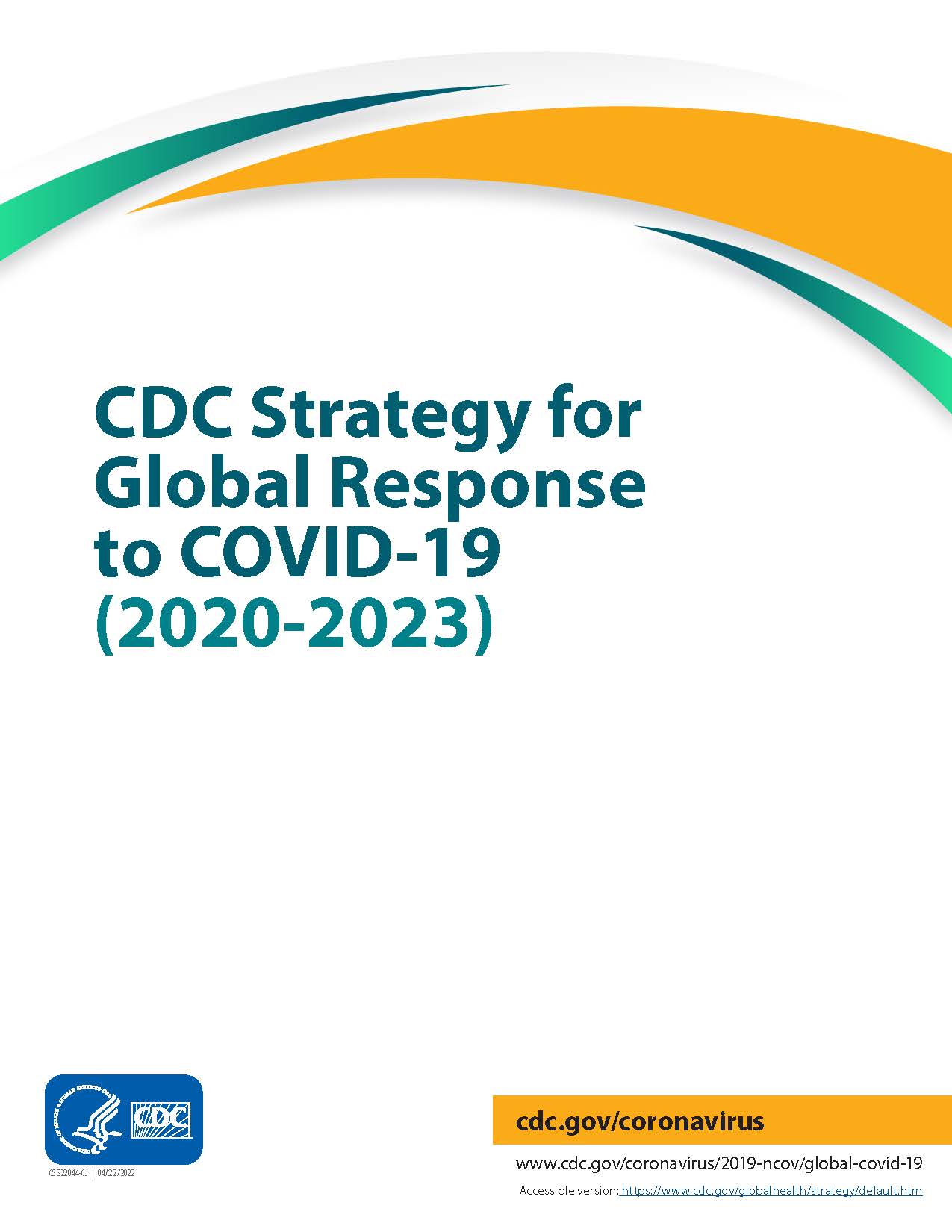
For CDC’s global COVID-19 response, I supported the design and production of a six-page strategy publication and companion fact sheets that had to communicate global goals, key principles, five strategic objectives, and detailed response activities.
I approached the work as both publication design and information UX: map the content, establish scan paths, create repeatable page patterns, clarify data and funding views, coordinate review-ready production, and prepare accessible print and PDF deliverables.
Project overview
Designing the reading experience before styling the pages.
The strategy moves from global context and U.S. government objectives into CDC goals, key principles, five strategic objectives, and a dense annex of activities. The design challenge was to make that hierarchy understandable for public-health leaders, partner organizations, ministries of health, and stakeholders reviewing the material at different levels of detail.
Graphic design, UX and information design, data visualization support, layout production, accessibility-ready formatting, and project/production management.
Turn policy-heavy global-health content and long activity lists into a document that supports quick scanning, deep reading, and later reference.
Adobe InDesign for page production, Illustrator for vector/data elements, Photoshop for image preparation, and accessible PDF/508-oriented QA.
Global COVID-19 strategy publication, companion fact sheets and funding views, print-ready files, web PDFs, and accessibility-minded final outputs.
The challenge
One communication system had to connect executive-level strategy, technical public-health priorities, five objectives, and long annex content without overwhelming the reader.
The goal
Create a credible, accessible publication that lets stakeholders understand priorities quickly, then move into supporting detail when they need it.
My response
I used modular hierarchy, repeatable page patterns, concise callouts, disciplined typography, data-focused fact sheets, and coordinated production checks to create continuity across the full set.
UX + information architecture
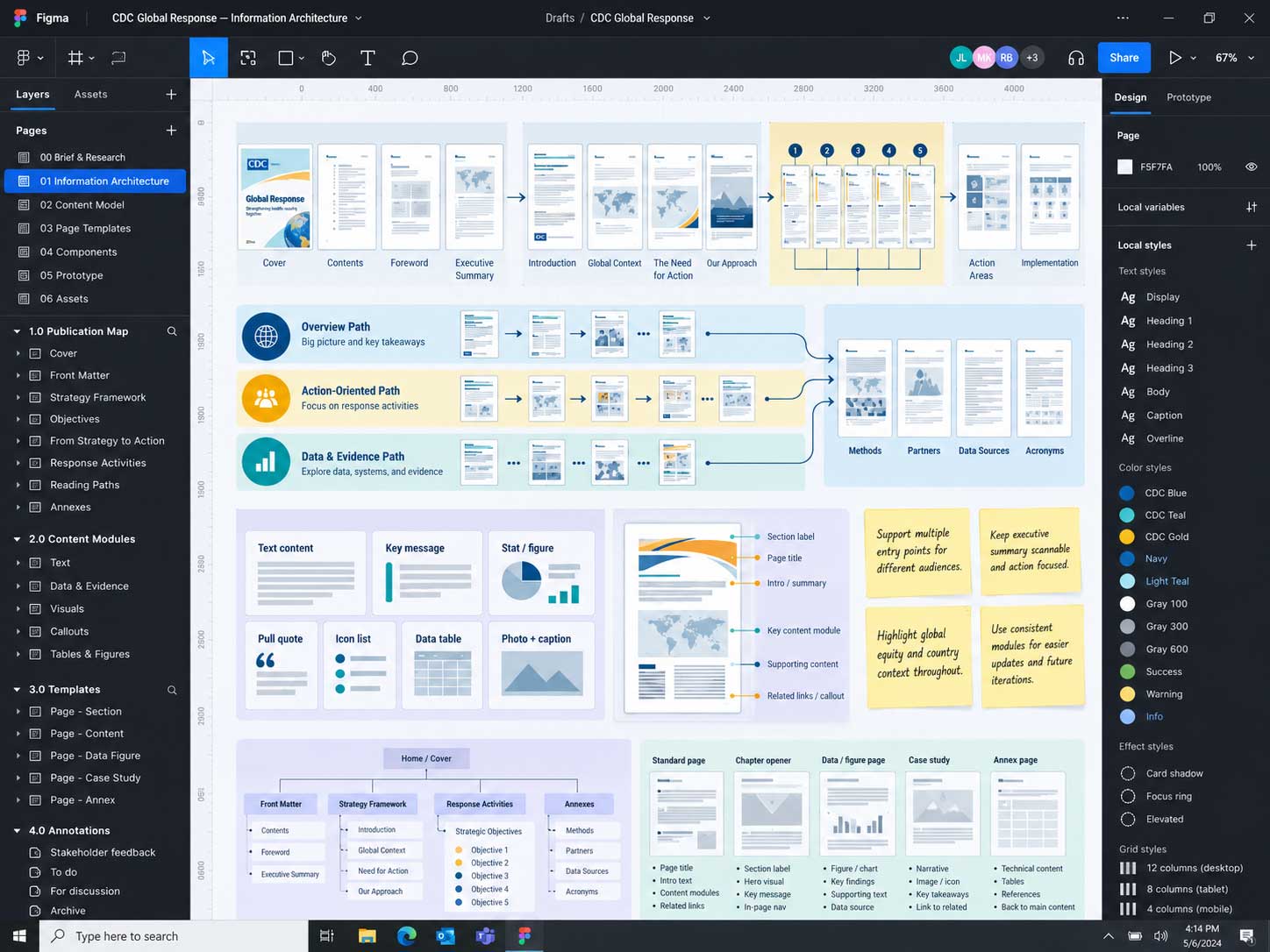
I treated the publication like an information product with multiple reading paths.
The source content was not one continuous story. Readers needed to understand the big picture, locate specific objectives, and reference detailed activities without losing orientation. I separated those jobs into predictable content patterns before refining the visual treatment.
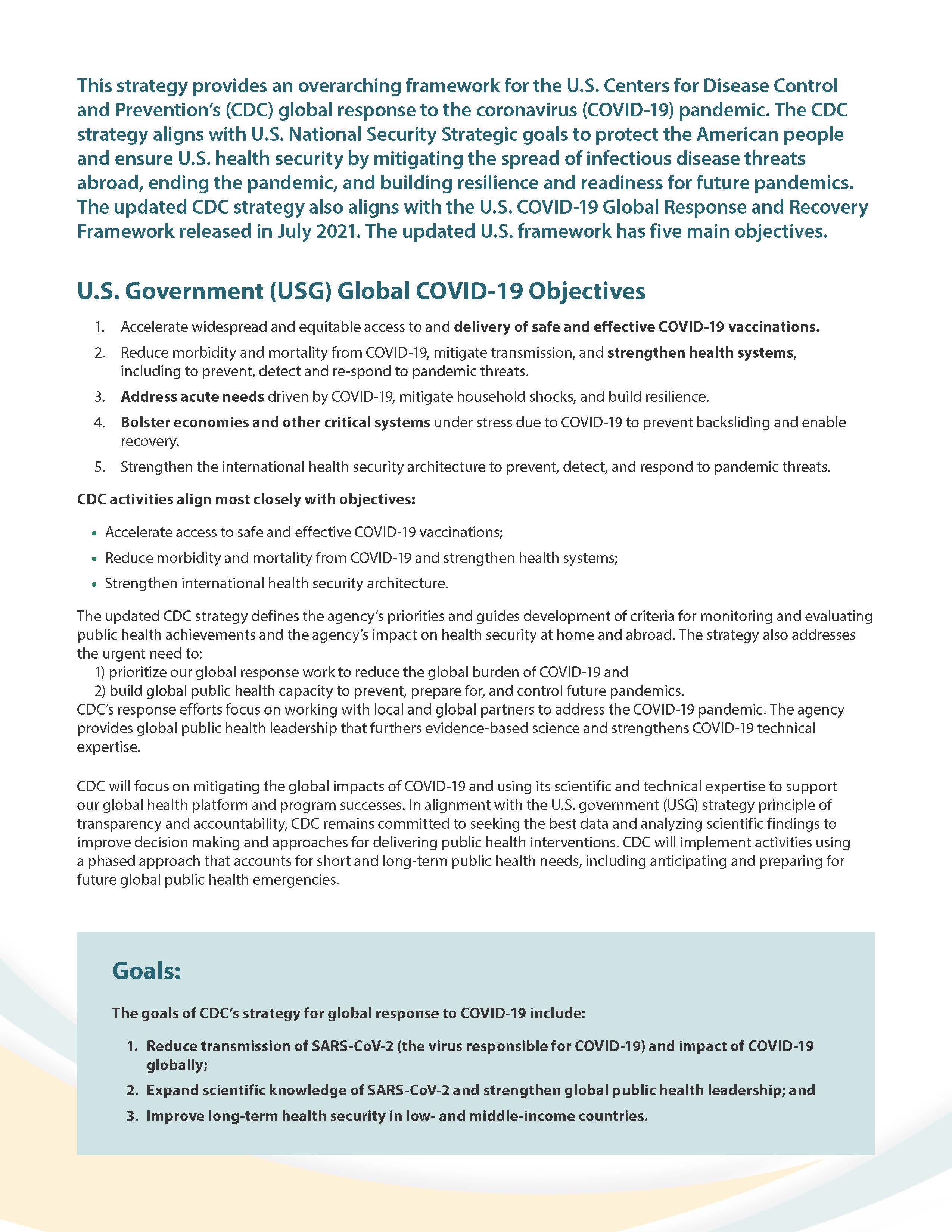
- Scan path: Strong headings and callout zones surface the strategy framework, goals, and priority information first.
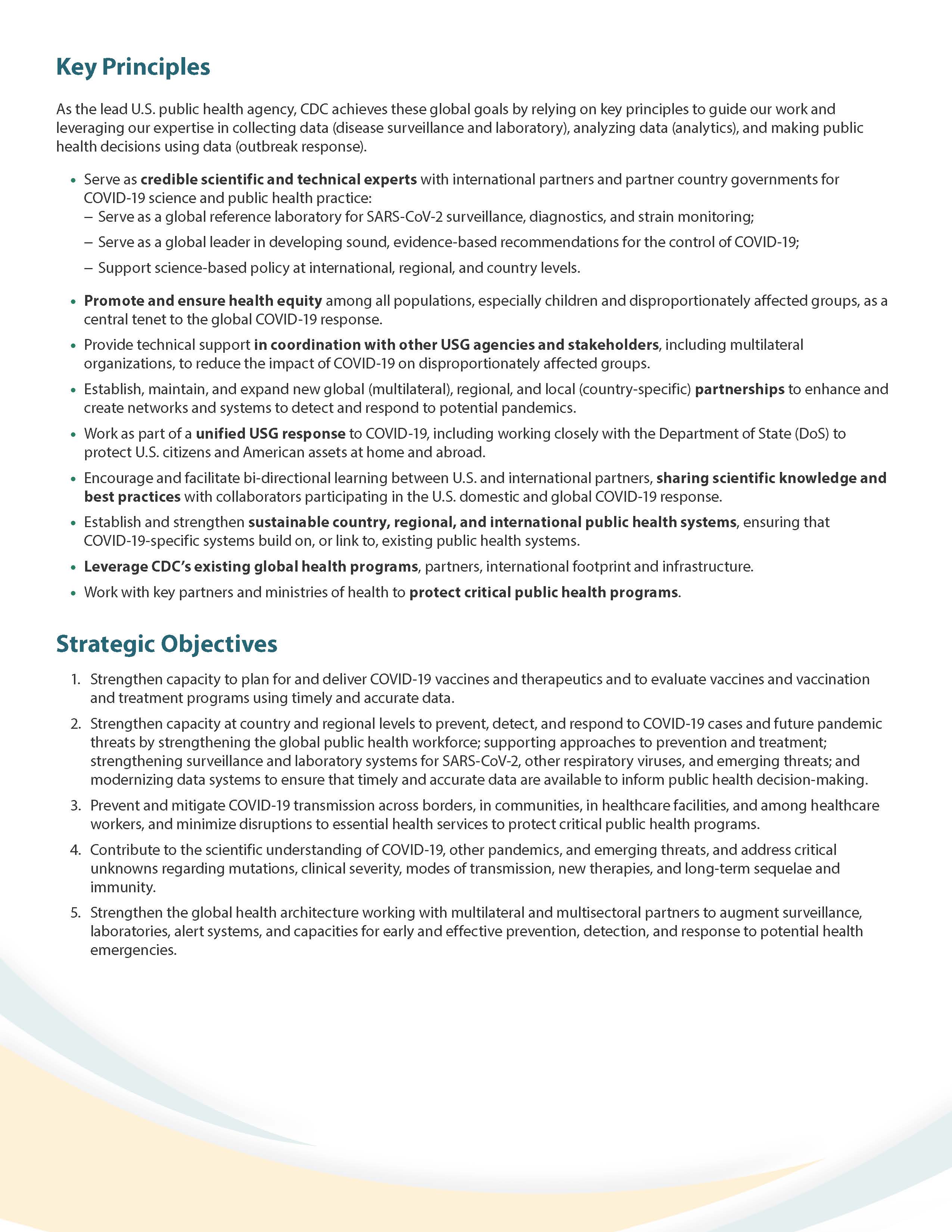
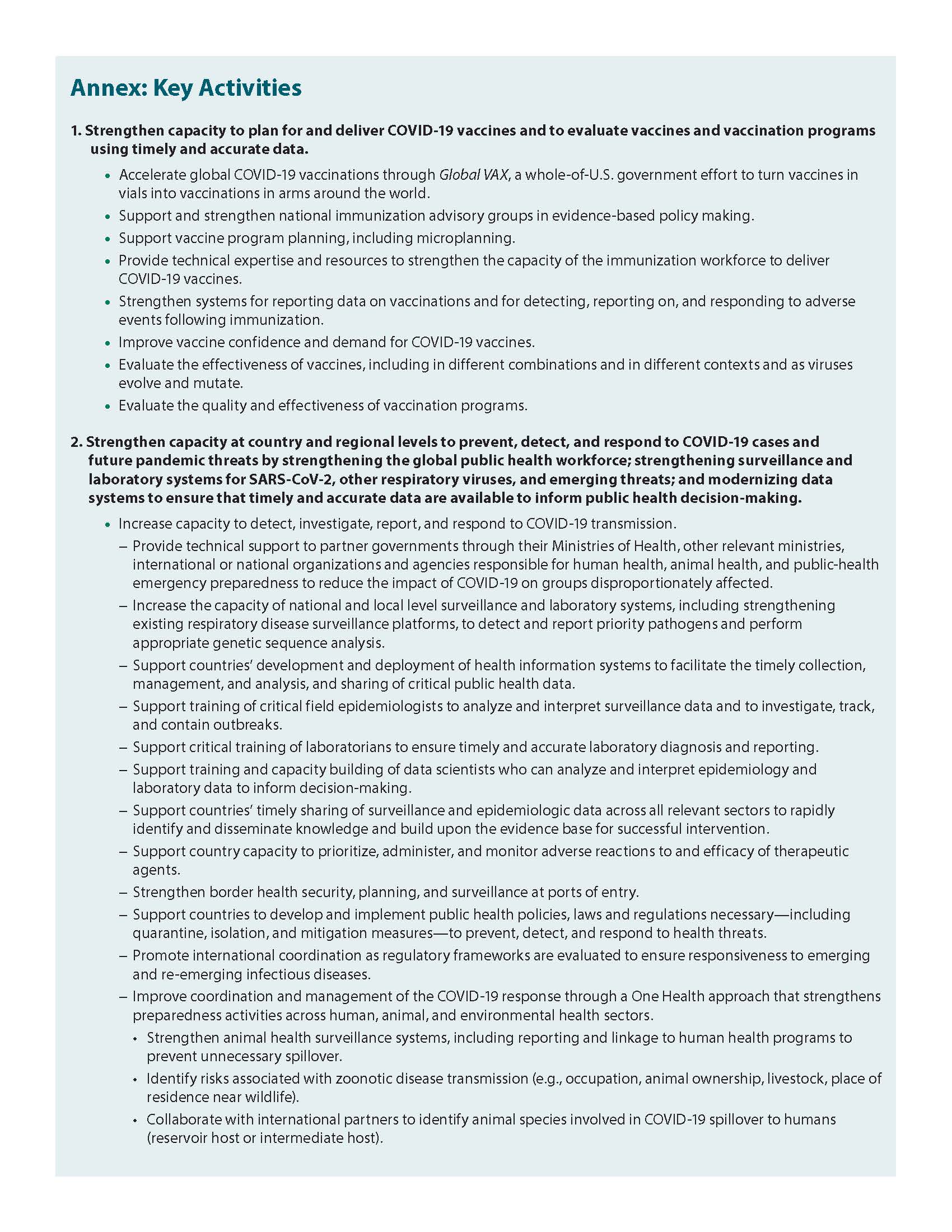
- Hierarchy: Distinct treatments separate global objectives, CDC goals, principles, strategic objectives, and annex activities.
- Modularity: Repeated lists, numbered structures, and spacing rules make content easier to compare and reference.
- Accessibility: Contrast, readable typography, logical content order, and accessible-PDF considerations were treated as design requirements.
Data visualization + executive communication
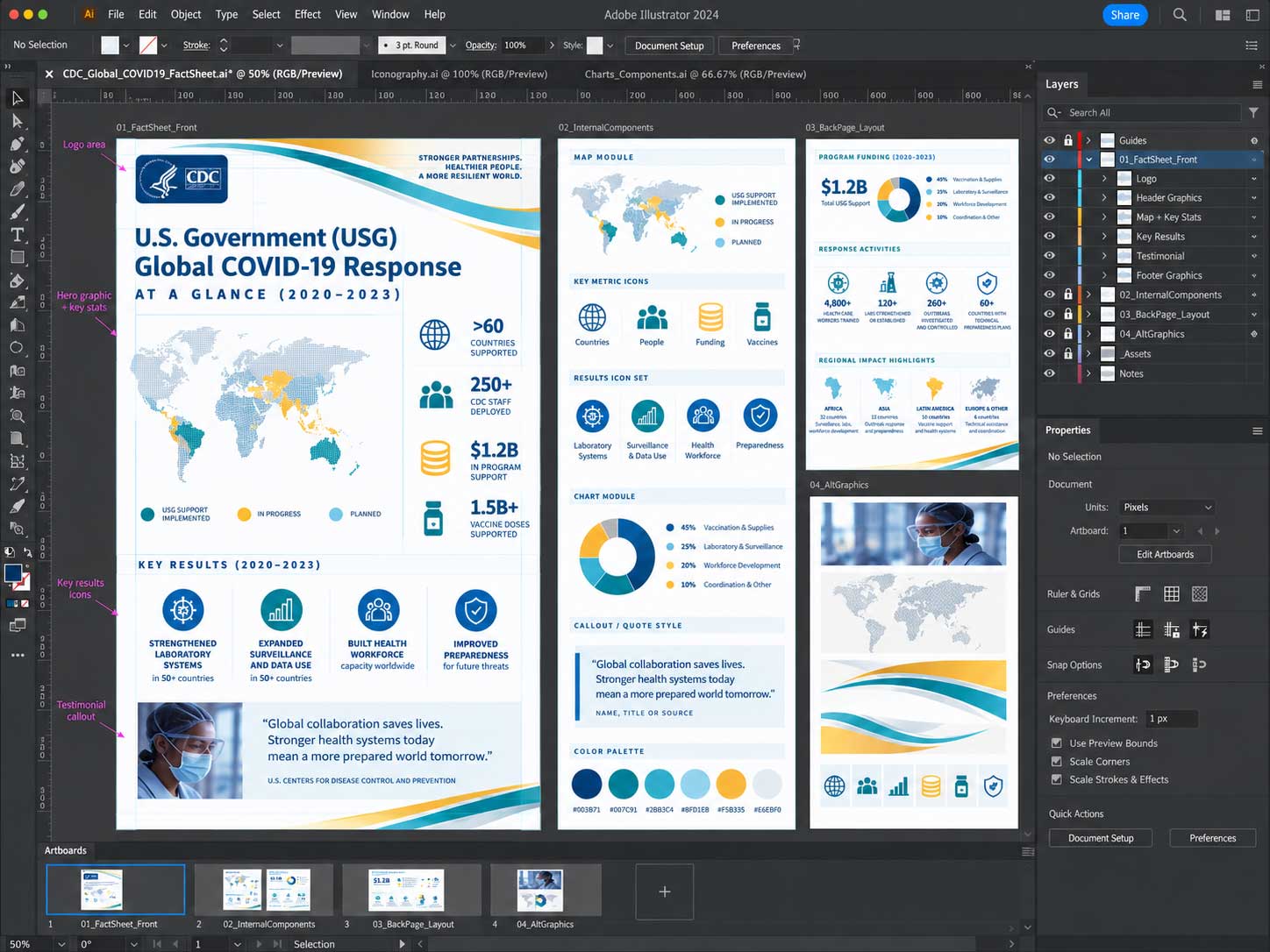
Companion fact sheets turned supporting data into faster decision-ready views.
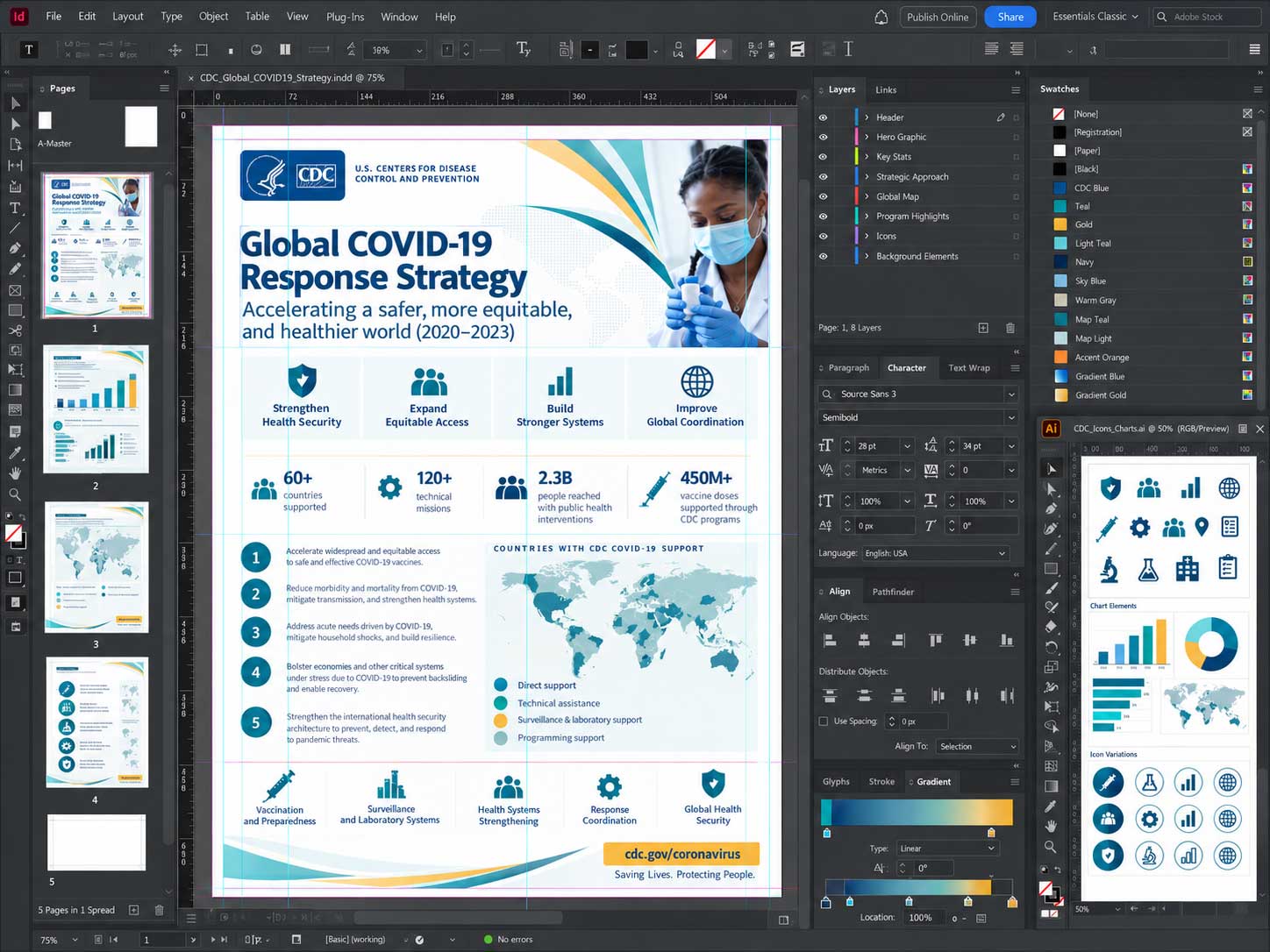
The strategy publication supported deeper reading. The companion fact sheets used tighter summaries, labeled data areas, grouped technical content, and funding visuals to help stakeholders understand key information more quickly.
Graphic design + production system
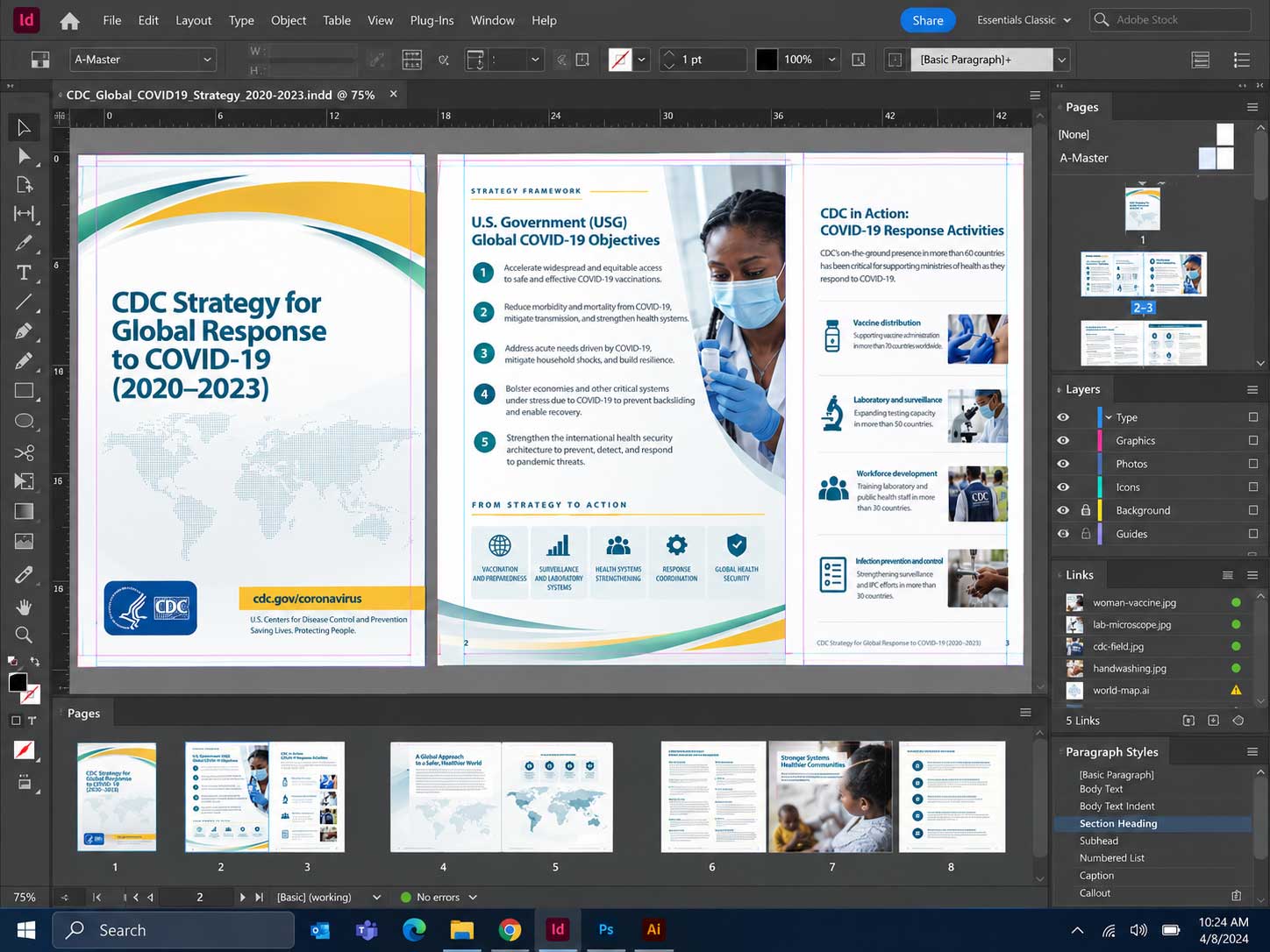
The design system had to hold together when the content became technically dense.
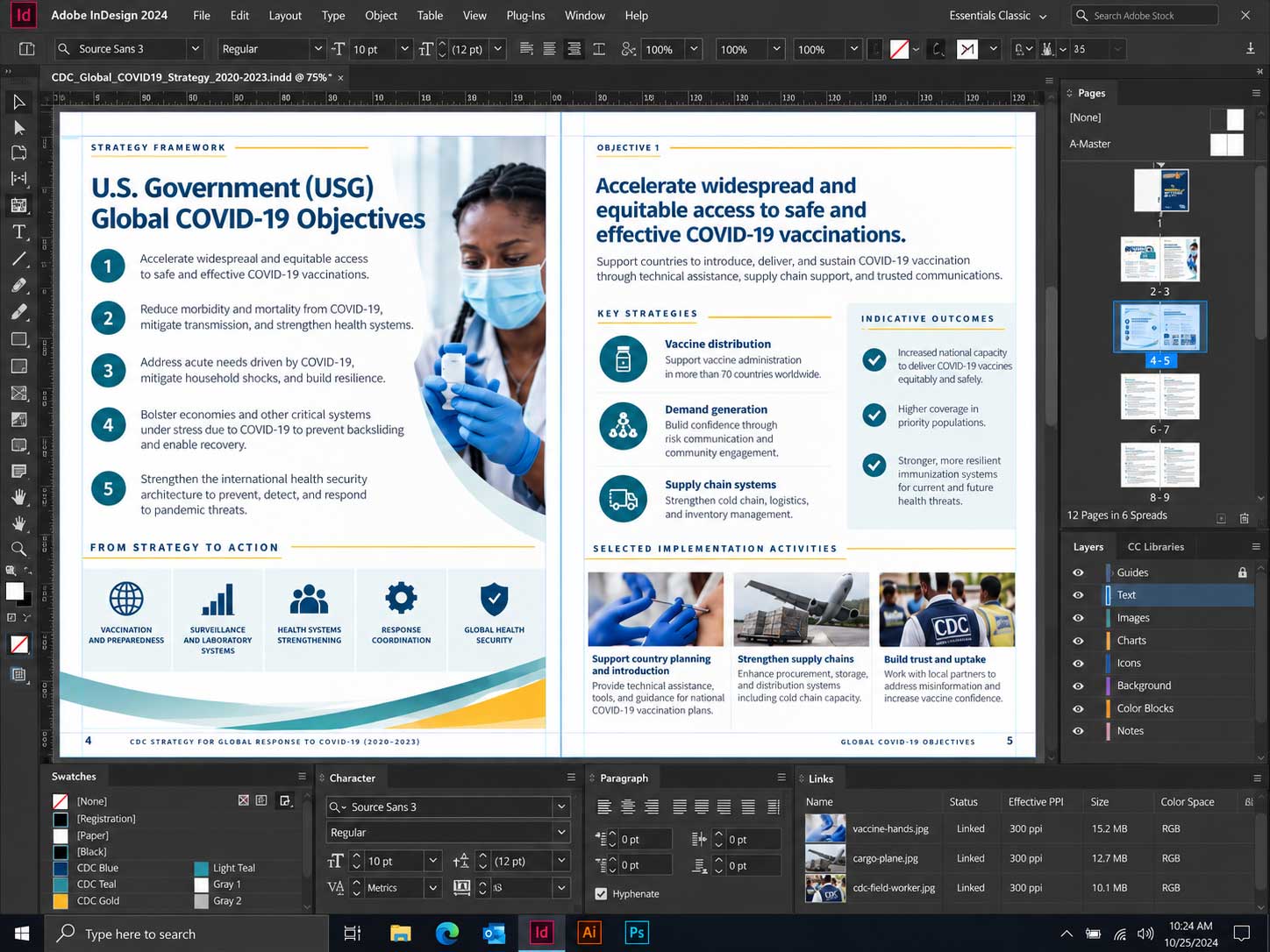
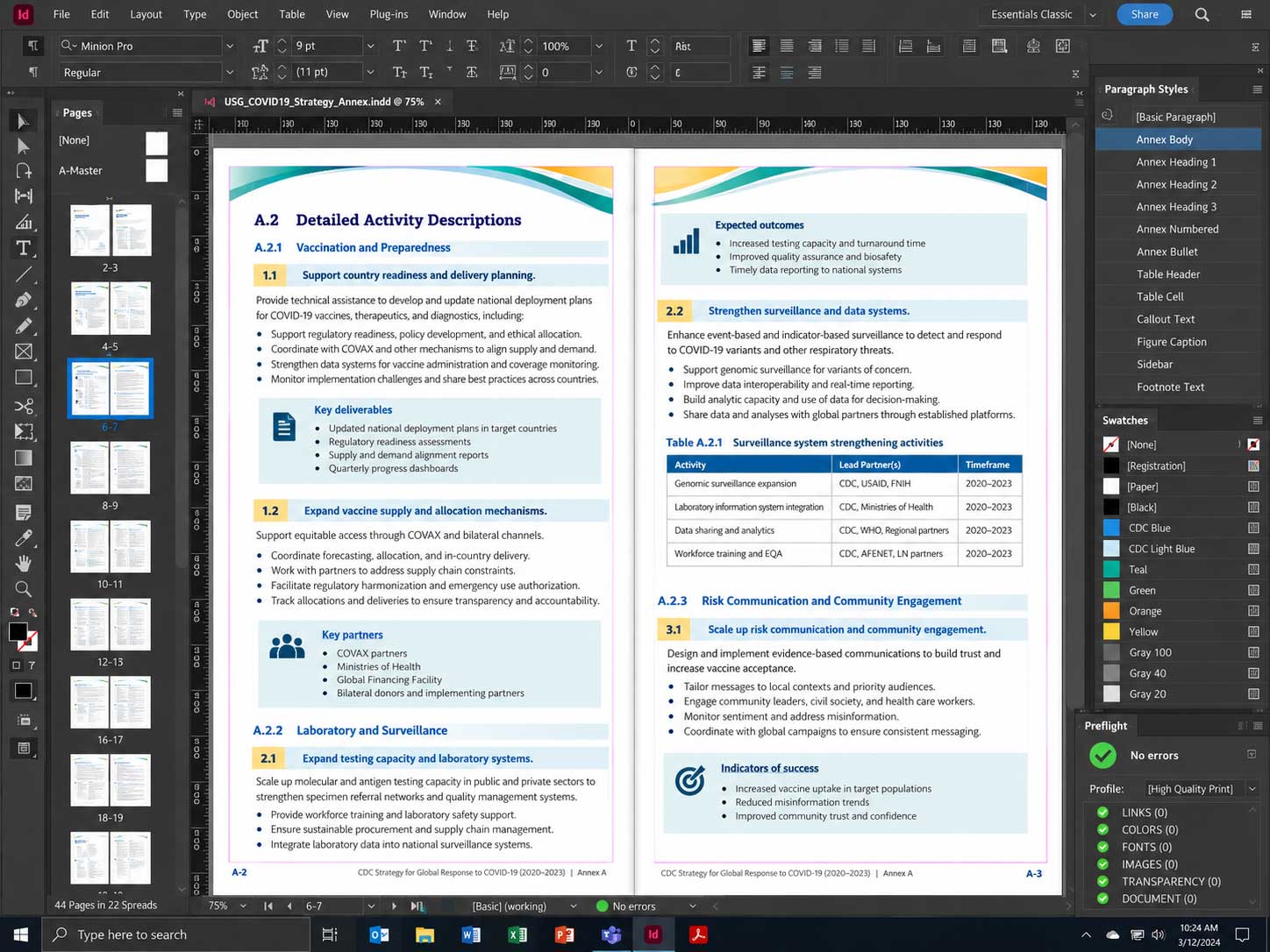
I used Adobe InDesign as the core production environment, supported by Illustrator and Photoshop for supporting visual assets. The priority was not decoration; it was maintaining page rhythm, readable structure, production consistency, and review-ready files as content density increased.
Design + project process
A four-step path from source content to accessible, production-ready communication.
Each step reduced risk before the next: understand the source material, structure the experience, build the visual system, then coordinate QA and delivery.
-
01
Audit
Inventory goals, principles, objectives, annex activities, audience needs, fact-sheet requirements, and places where dense information needs stronger emphasis.
-
02
Structure
Map the reading hierarchy, page sequence, recurring content types, callouts, numbering logic, and reusable layout rules before polishing individual pages.
-
03
Design + visualize
Apply typography, spacing, CDC-aligned color, data groupings, fact-sheet visuals, and production-ready page patterns across long-form and quick-reference content.
-
04
Coordinate + QA
Manage review-ready files, incorporate revisions, verify consistency and accessibility-minded formatting, and prepare print/PDF deliverables for final distribution.
Final publication system
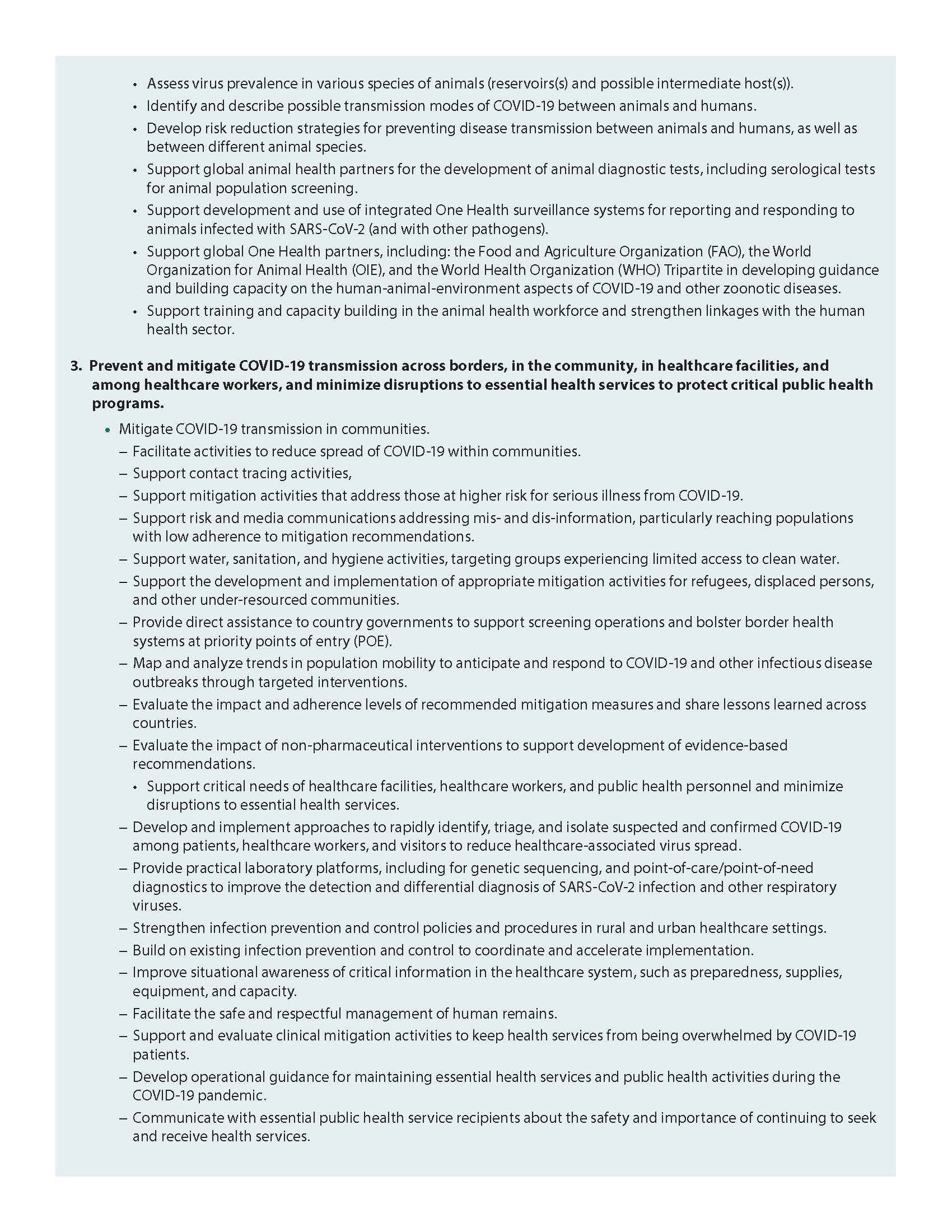
Each page solves a different communication problem while preserving one recognizable system.
The publication moves from orientation to detailed reference content without forcing the reader to relearn the design from page to page.
End result
A clearer communication system for strategy, data, and global-response detail.
The outcome was a cohesive set of materials that supports executive scanning, deeper technical review, accessible distribution, and consistent communication across long-form strategy and quick-reference fact sheets.
Clearer information UX
Predictable hierarchy and reading paths help stakeholders move from global context into goals, objectives, and detailed activities with less friction.
Stronger data communication
Fact sheets, grouped data, and funding visuals create faster entry points into supporting information without separating it from the larger strategy story.
Production + project management
Reusable patterns, coordinated revisions, consistent file production, and accessibility-minded QA support reliable print and digital delivery.
Design perspective