
Publication Design · Information Design · Adobe InDesign
Turning a dense public-health strategy into a clear, repeatable publication system.
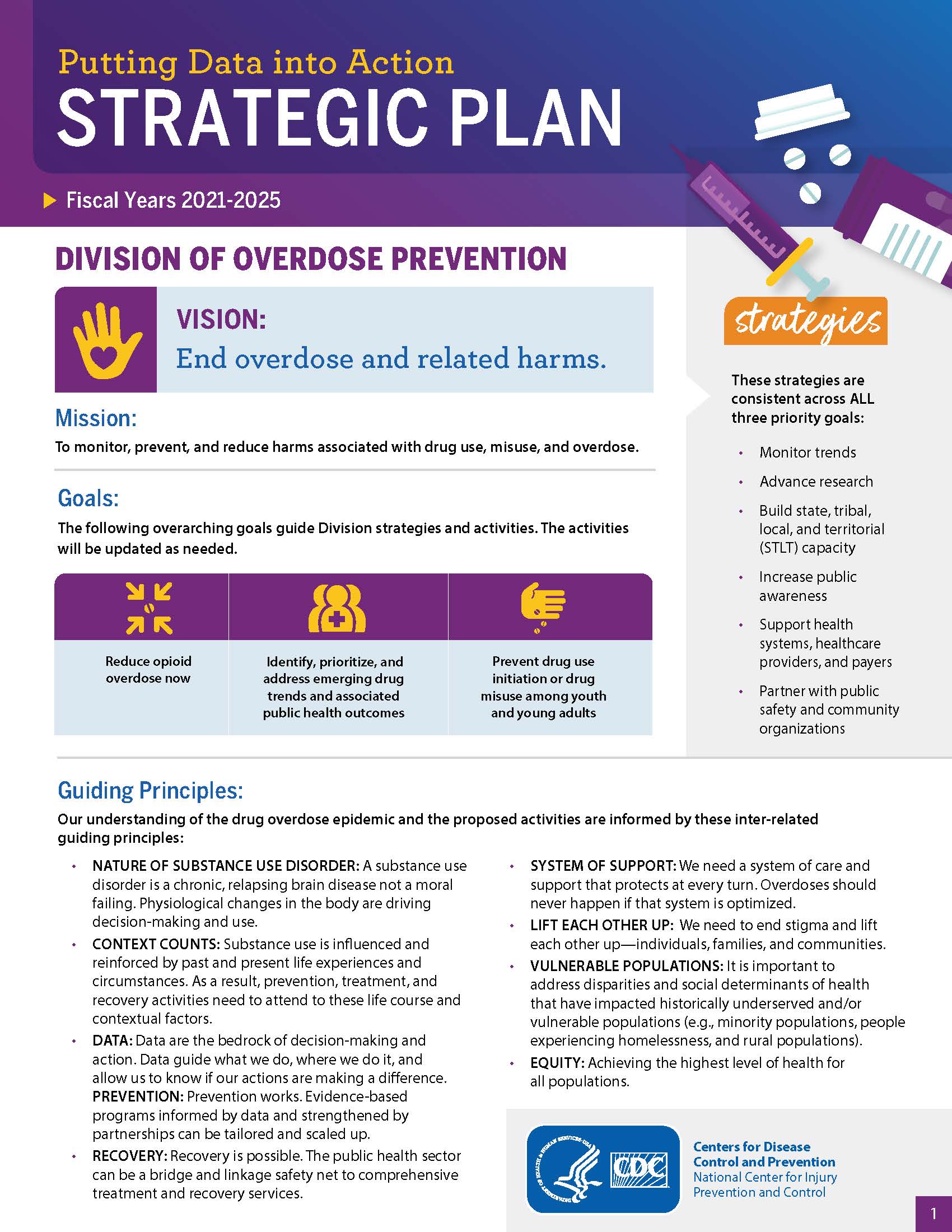
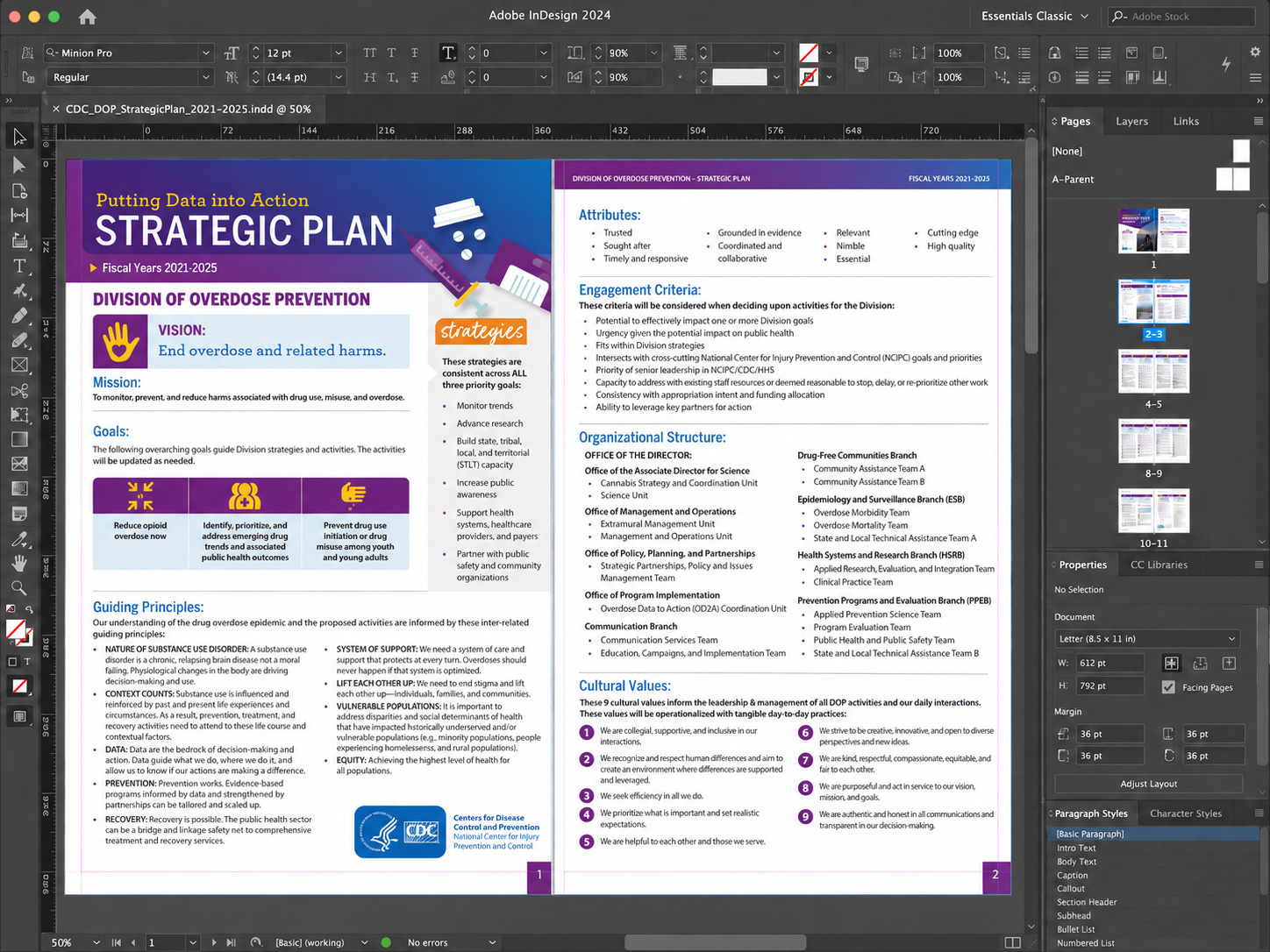
For CDC’s Division of Overdose Prevention, I designed and produced an 11-page strategic plan that had to move from high-level vision and goals into detailed, numbered strategy content without losing clarity.
I treated the document as a system: define the hierarchy, establish repeatable page patterns, build strong visual cues, then apply them consistently from the opening overview through the most content-heavy pages.
Project overview
Designing the information system before styling the pages.
The plan moves from vision, mission, goals, engagement criteria, organizational structure, and cultural values into detailed strategy and activity content. The design challenge was to make those different information types feel connected, scannable, and credible.
Publication and visual design, hierarchy, layout system, typography, page production, and final-document refinement.
Organize dense strategic content for readers who may scan for priorities or read deeply into individual activities.
Build a modular page architecture with predictable hierarchy, visual cues, and reusable content patterns.
A cohesive strategic publication prepared for digital PDF use and print-ready distribution.
The challenge
One document had to support executive-level summaries, organizational information, goals, strategies, and highly detailed numbered activities.
The goal
Create a publication that could be scanned quickly, read in depth, and referenced later without readers losing their place in the hierarchy.
My response
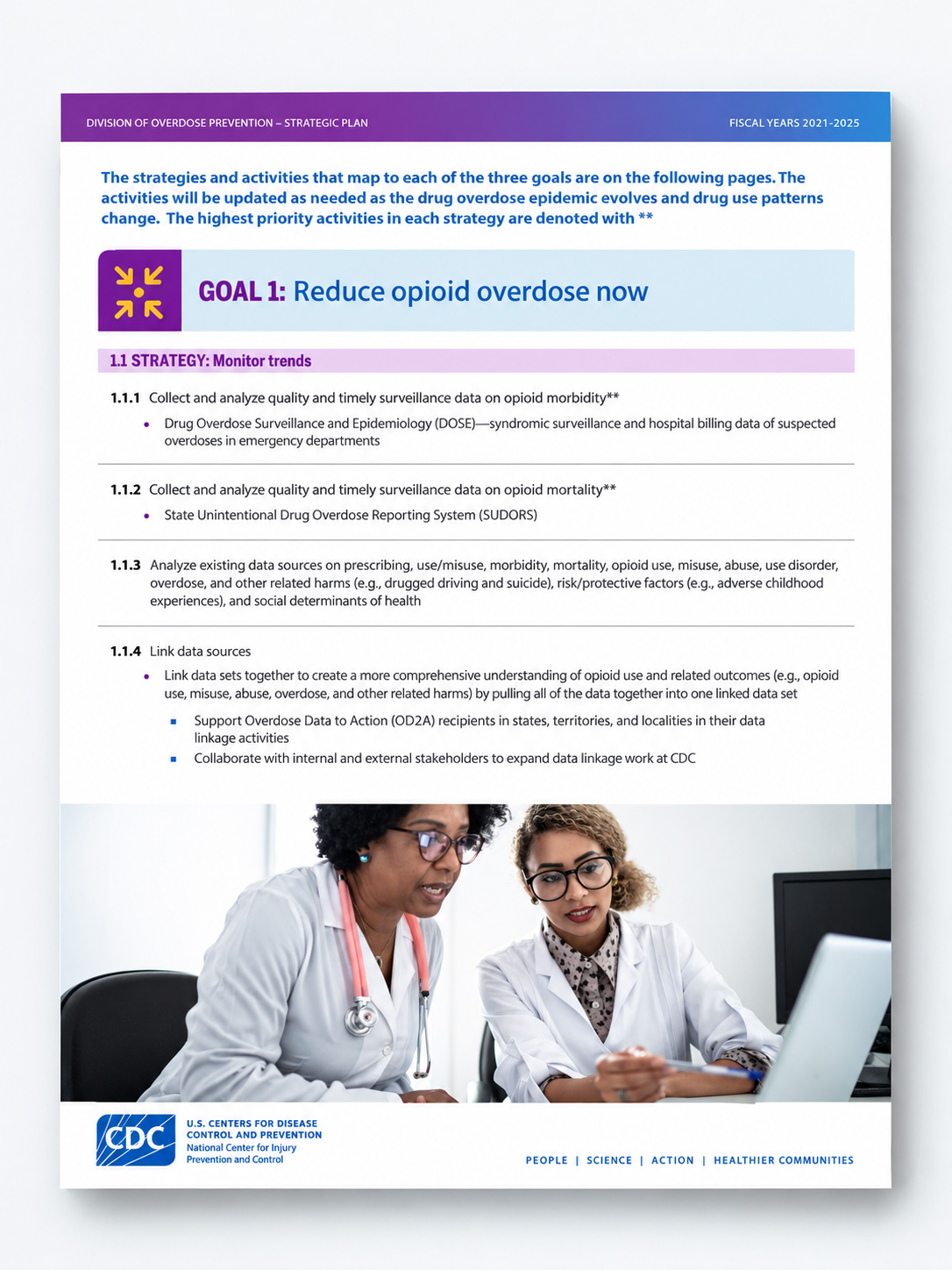
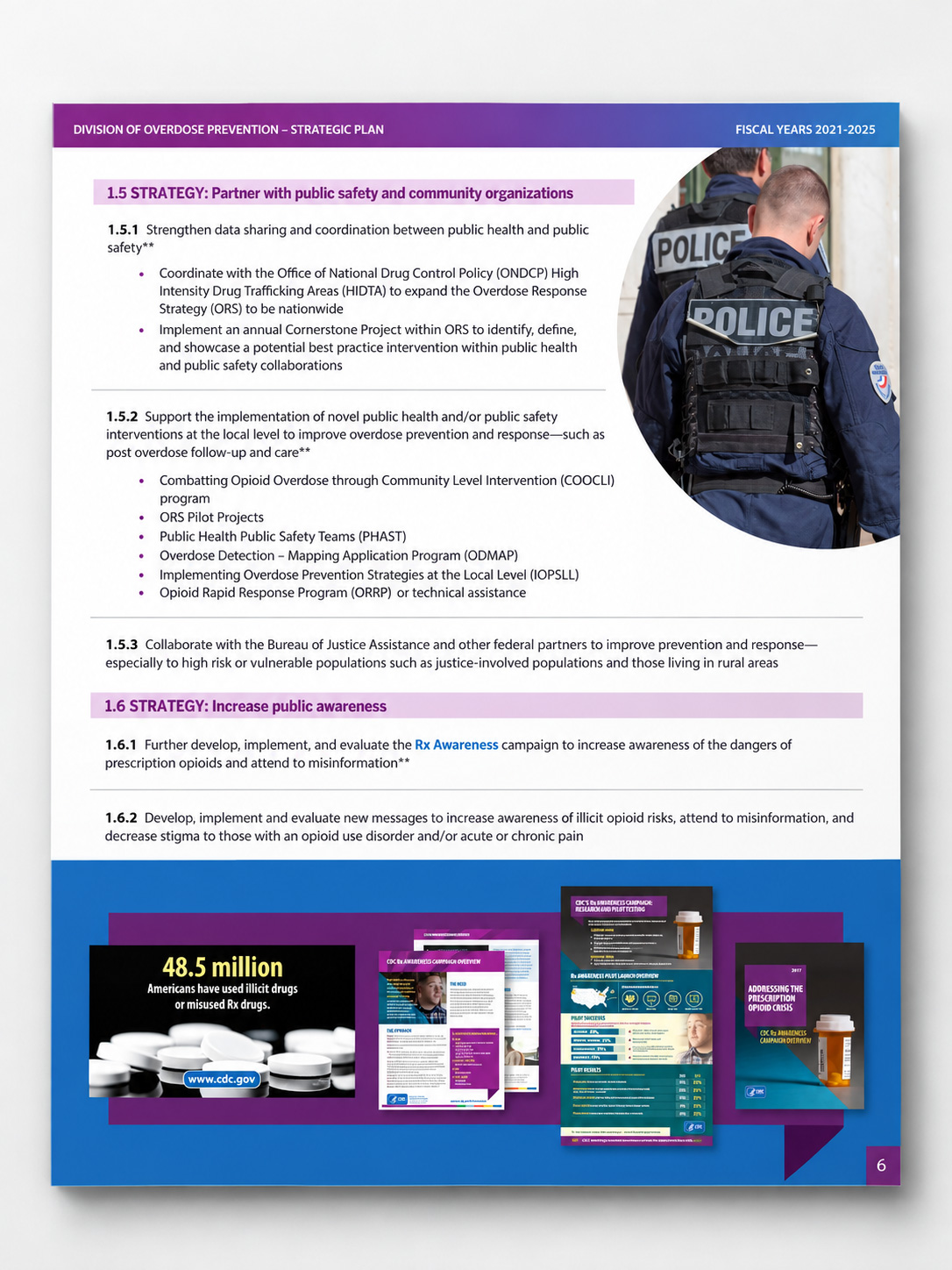
I used repeatable headers, goal templates, numbered activity structures, callouts, icon cues, photography, and consistent spacing to turn the content into a system.
Content architecture
I converted the plan into repeatable information patterns.
I started by identifying the recurring content types that needed their own visual role: division framing, goal introductions, strategy labels, numbered activities, quotes, data callouts, imagery, and supporting notes.
- Hierarchy: Distinct levels separated goals, strategies, and activities without relying on decorative styling.
- Grid: Stable margins and content zones gave dense pages enough structure while allowing different content lengths.
- Emphasis: Purple and blue established structure; yellow and orange created selective points of attention.
- Continuity: Consistent headers, page numbers, section labels, and spacing helped readers stay oriented.
InDesign production
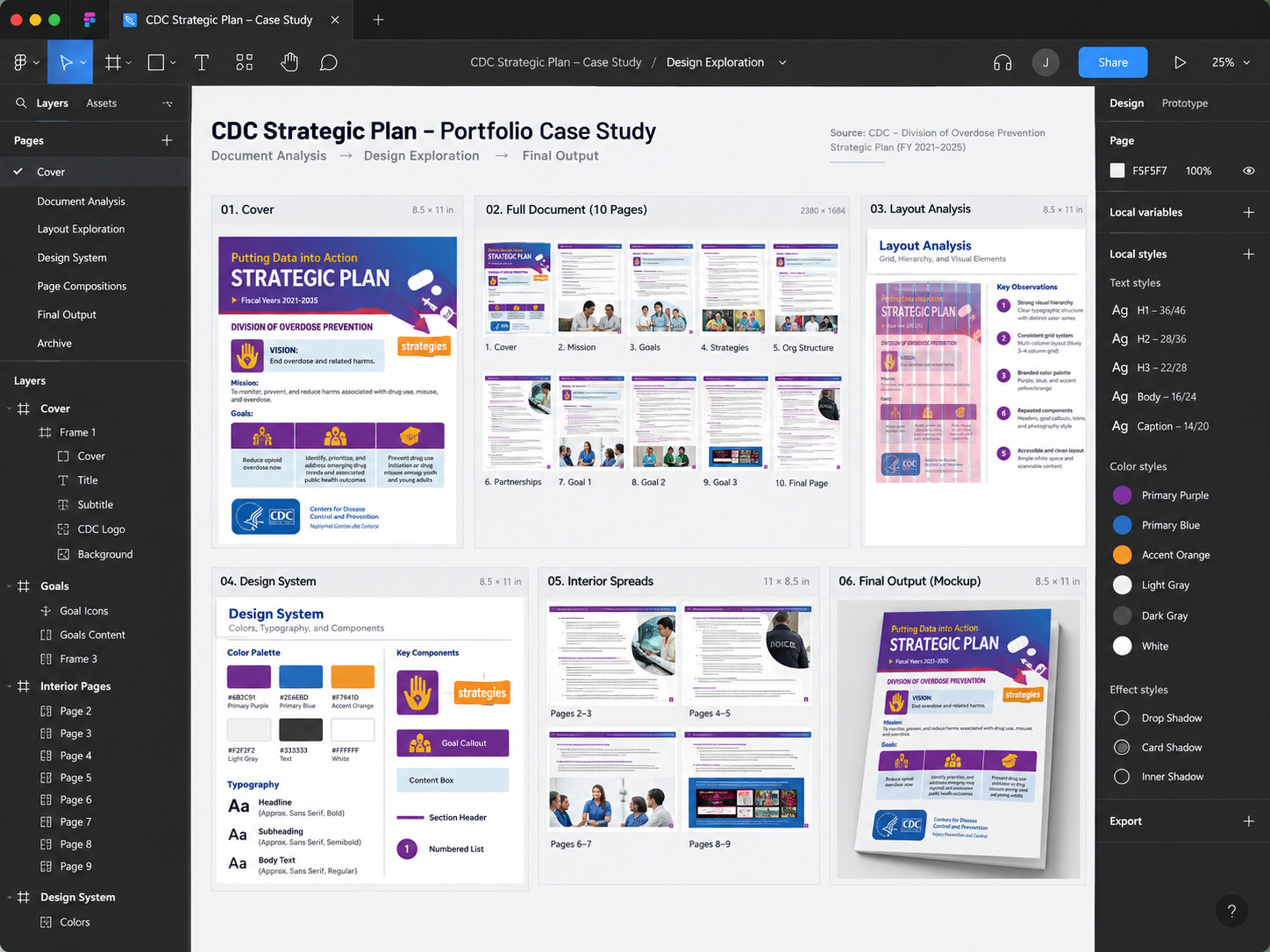
The layout system had to work on the densest pages, not just the cover.
In InDesign, I used page guides, text and image frames, repeatable spacing, page sequencing, and paragraph-style logic to keep the document consistent while allowing different sections to carry different information densities.
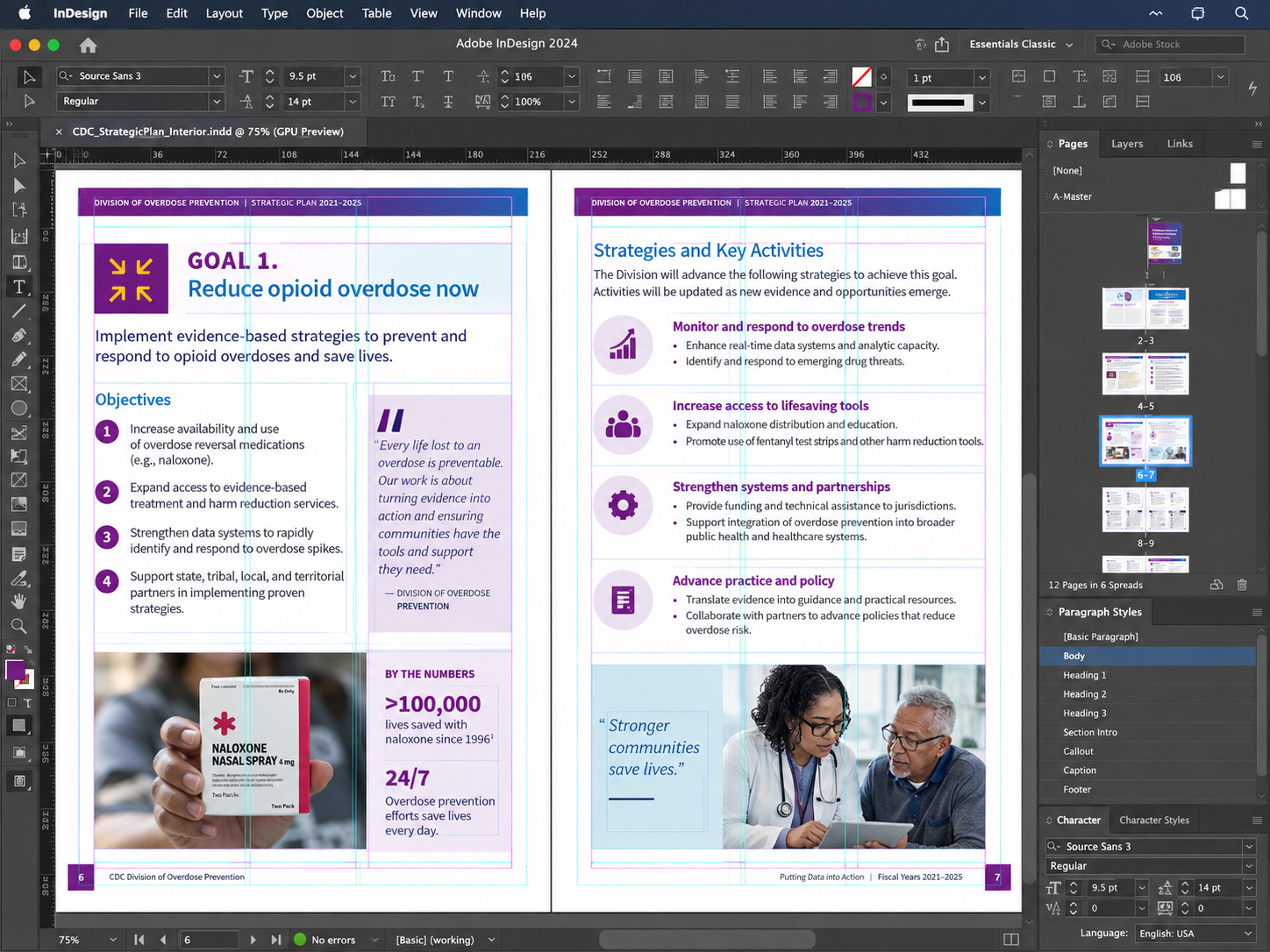
Design process
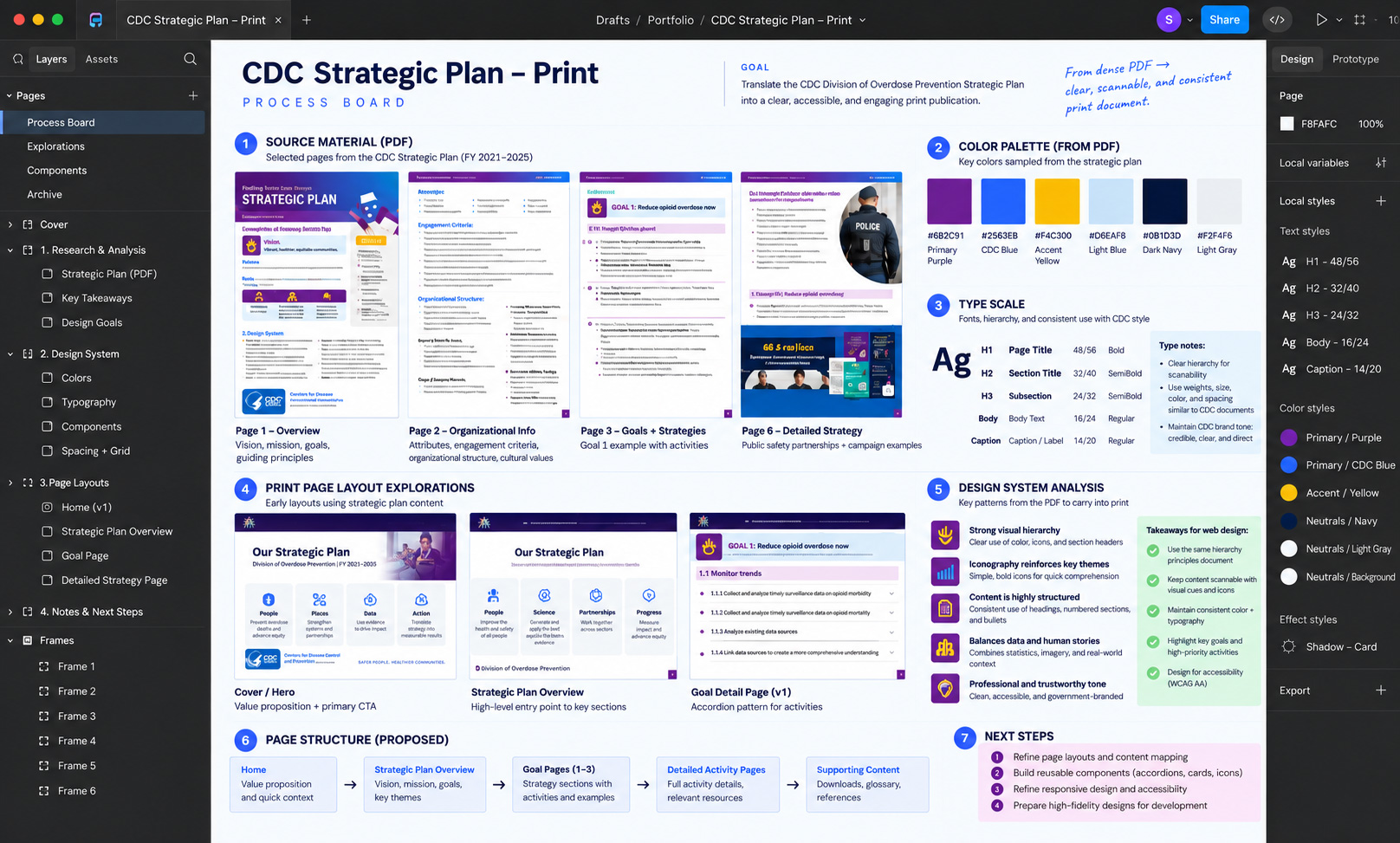
A four-step path from source content to production-ready publication.
Each step reduced ambiguity before the next: understand the content, establish the system, apply it consistently, then refine the publication as a complete document.
-
01
Audit
Identify the content hierarchy, repeated information types, audience needs, and sections that require stronger visual emphasis.
-
02
Structure
Establish the grid, typography, section framing, goal patterns, strategy labels, and reusable page modules.
-
03
Apply
Build the full publication, adapting the same system to summaries, lists, imagery, callouts, and detailed activity content.
-
04
Refine
Review page rhythm, alignment, spacing, hierarchy, consistency, and final PDF production across the document.
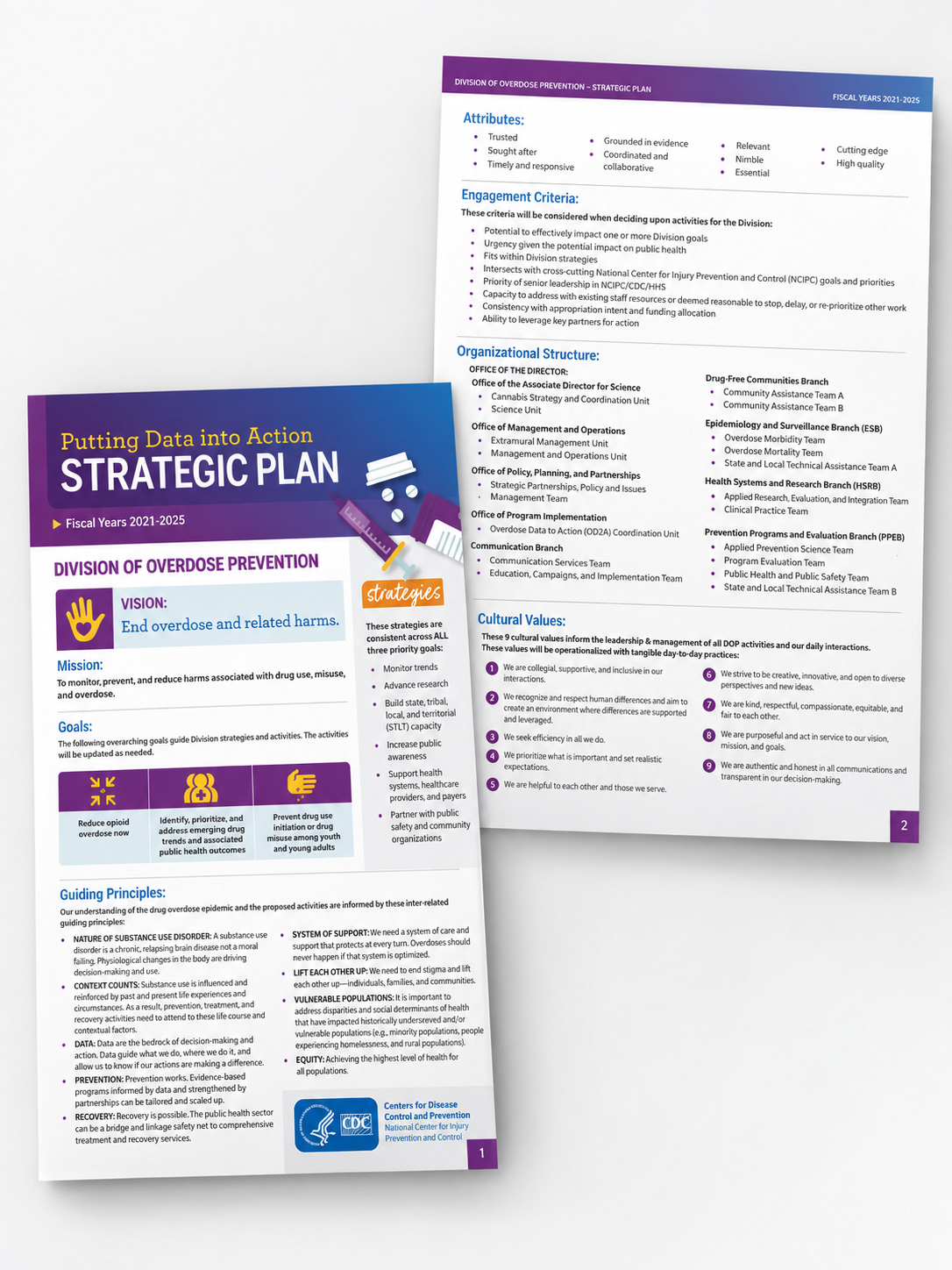
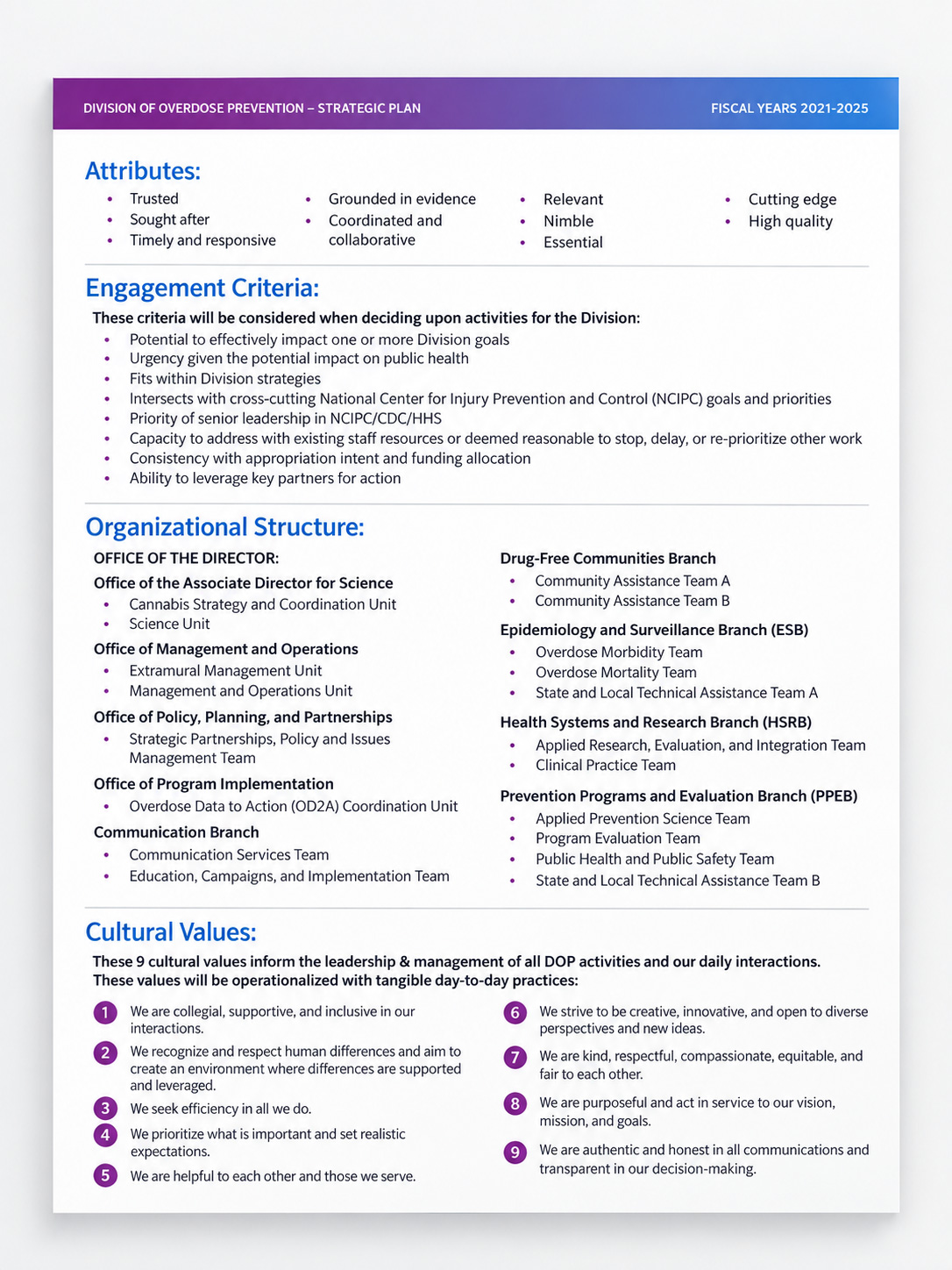
Final publication system
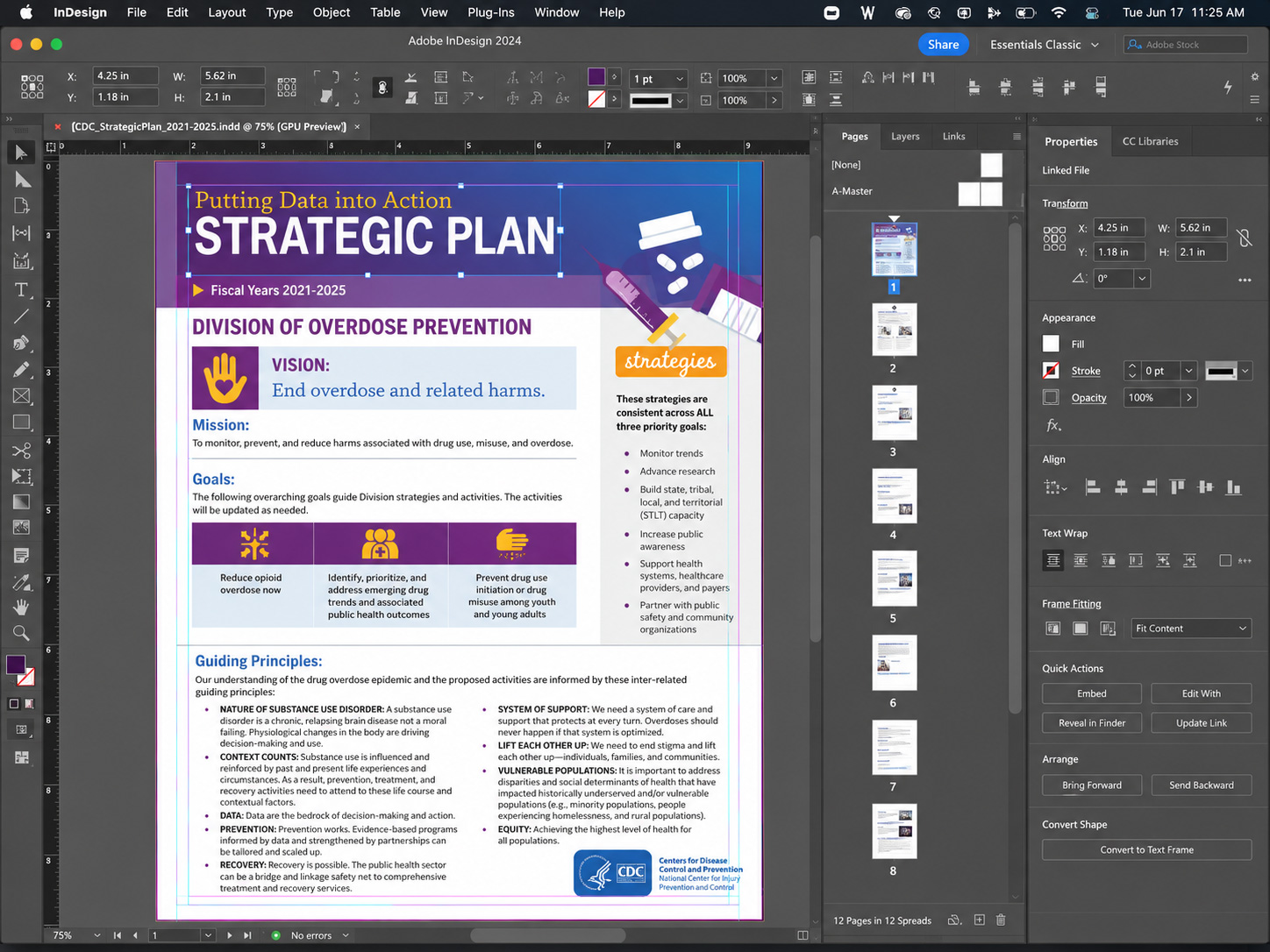
Each page solves a different content problem while staying inside the same visual language.
The repeated system supports both orientation and flexibility: overview pages can be visual and concise, while strategy pages can carry much denser reference content.
End result
A strategic publication built for clarity, consistency, and reuse.
The value of the design is not a single decorative moment. It is the consistent structure that helps readers understand the Division’s priorities and navigate a complex document from beginning to end.
Clearer navigation
Repeated hierarchy and section framing help readers understand where they are and what level of information they are reading.
Scalable system
Reusable patterns accommodate short summaries, long activity lists, imagery, callouts, and supporting program content.
Production-ready
Consistent page architecture supports a polished document for digital PDF use, stakeholder review, and print-ready distribution.
Design perspective